

 English / engels
  Dutch / nederlands
Birds
[All pictures of garden wildlife on this page are thumbnails. Click on any thumbnail for a large format to be displayed.
The animal's English name is usually specified, provided it has one. The scientific name is always mentioned in the caption of the photograph.
Click on  for sound. For more information on a species click on a bird's name.
You will be given a separate page containing more information about the bird's habits, the eggs, extra pictures and also its sound (if available).]
for sound. For more information on a species click on a bird's name.
You will be given a separate page containing more information about the bird's habits, the eggs, extra pictures and also its sound (if available).]
This page is divided into chapters, of which the first covers the subject of passerine birds and is by far the biggest. That chapter is divided into 7 smaller ones to keep navigation possible. In the chapter exotic birds we tell you about escaped species. It is doubtful, to say the least, whether these creatures stand a chance to survive in the wild in this part of the world.
Contents: 1 Passerine Birds, 2 Pigeons, 3 Woodpeckers, 4 Plovers 5 Exotic Birds, 6 Water Birds and 7 Other Birds
Contents: 1.1 Thrushes, 1.2 Sparrows, 1.3 Titmice, 1.4 Finches, 1.5 Warblers, 1.6 Crows and Jays and 1.7 Other Passerine Birds.
This is a large family of passerine birds. In general most of its members eat worms and insects. In colder areas they eat nuts and sometimes in winter also berries. Most thrushes have long and pointed beaks. All just hatched thrushes are very speckled. A number of species, such as the Robin and the Blackbird, loose their speckles when they reach the adult age. Others, like the Song Thrush and the Mistle Thrush remain speckled all their life. In the Netherlands the Blackbird is the most common bird. It is estimated that there are around 3.5 milion of them, thus making it even more common than the House Sparrow! The male Blackbird is black indeed with a striking yellow beak. The female is brown with a less striking brown beak.
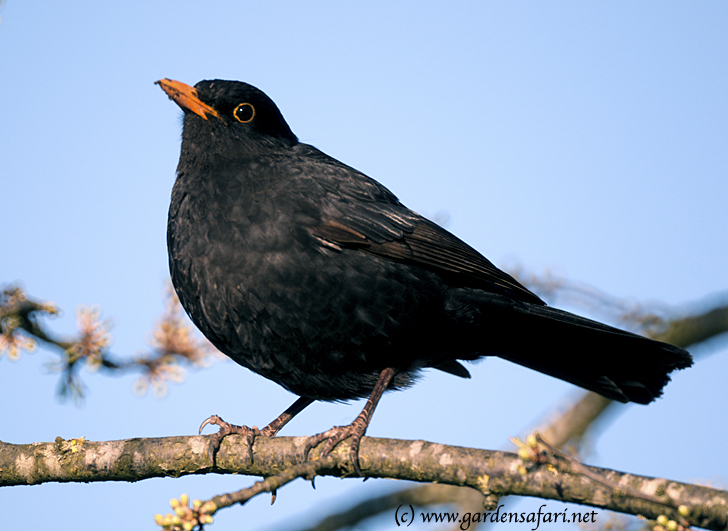
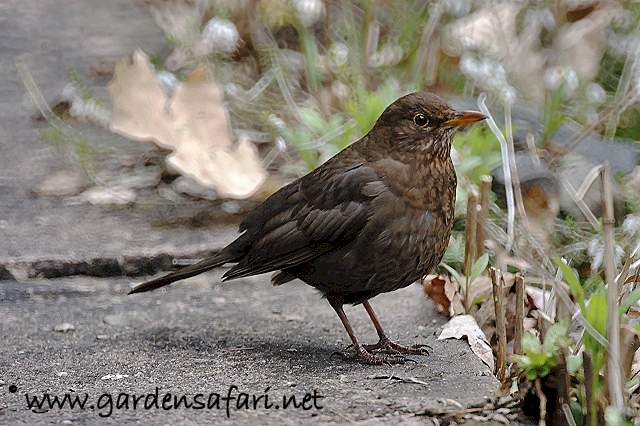
Female Blackbirds (Turdus merula) are brown and not black at all!. The male is in the picture to your left, the female in the picture to your right.
Another well-known thrush is the Song Thrush. The majority of thrushes sing beautifully, but the Song Thrush is a credit to its name. Gardeners are happy with Song Thrushes in their neighbourhood because these birs eat snails. The Redwing looks like the Song Thrush very much, but has a red spot around the wing. This species breeds in Scandinavia but spends the winters in Western- and Southern Europe. In the Benelux you can see a lot of them during the migration season in autumn (especially in October and November).
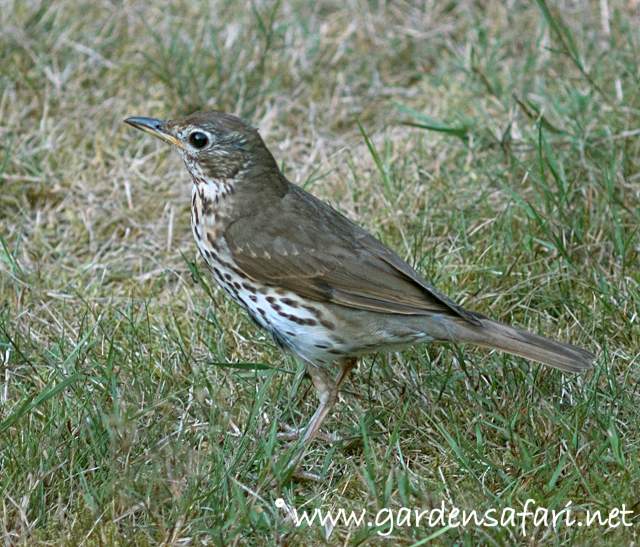
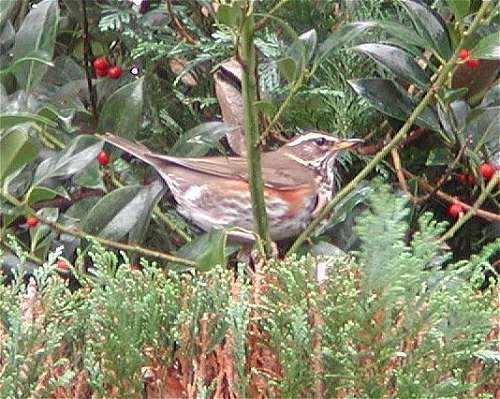
The Song Thrush (Turdus philomelos), to the left and the Redwing (Turdus iliacus), to the right look rather similar.
One of the best known birds in the garden is the Robin. You can often see it from close by as it is not shy at all. Adults have the well known red breast. Males and females look identical and both have their own territory during winter, which they will defend. That's why both sexes sing, which is rare in the world of birds. And what's more: they sing nearly all year round. The young are very speckled, thus showing they actually belong to the Thrushes family.
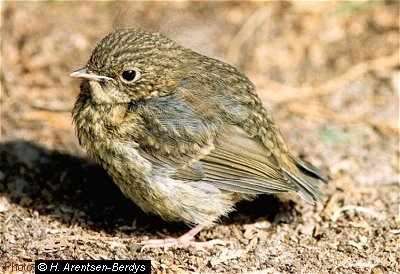
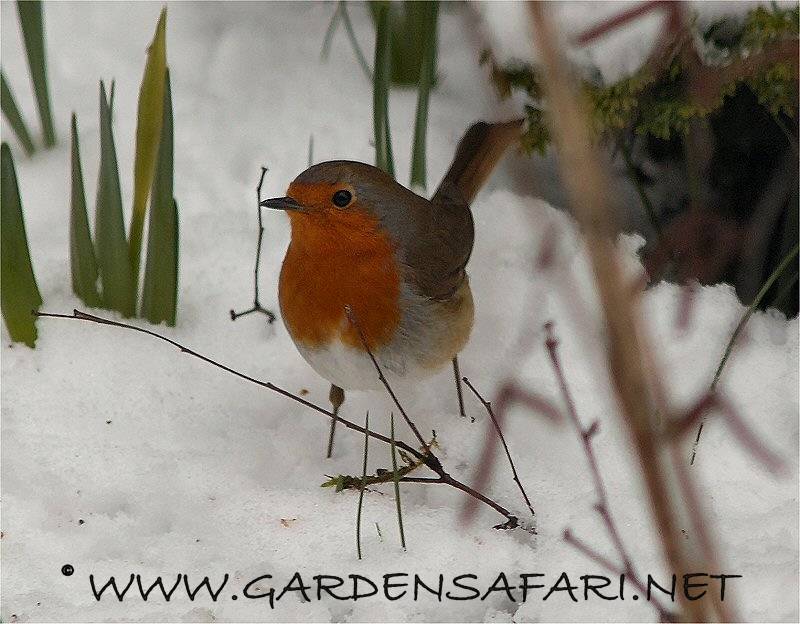
The Robin (Erithacus rubecula), to the left a chick, is a forward and even curious little bird.
Other thrushes in our garden include the Mistle Thrush, the Nightingale, the Redstart and the Fieldfare. At the moment we have no good pictures available.

Once the House Sparrow was the most numerous bird in the Netherlands. But those days are over. Nowadays we contruct and isolate our houses in a different way than in the past and, consequently, there is no place or hole in the roof for the House Sparrow to build its nest. The number of House Sparrows in Holland dropped considerably over the past few years. And not only in Holland, but in Belgium and England as well. In England the species has even been put on the red list of endangered species! The male, below to your right, is richly marked and has a beautiful ash grey cap. The female, depicted below to your left, is less colourful and her cap is like the rest of the body covered with pale browns and beiges.
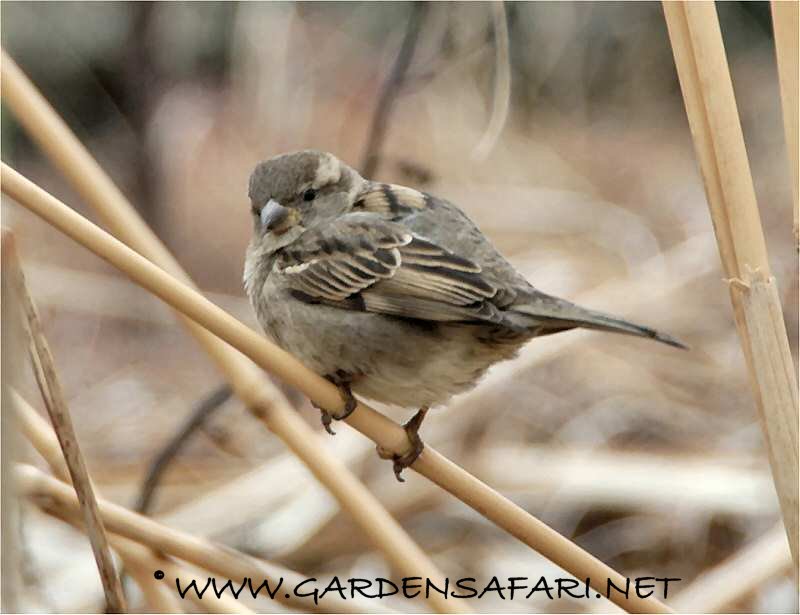
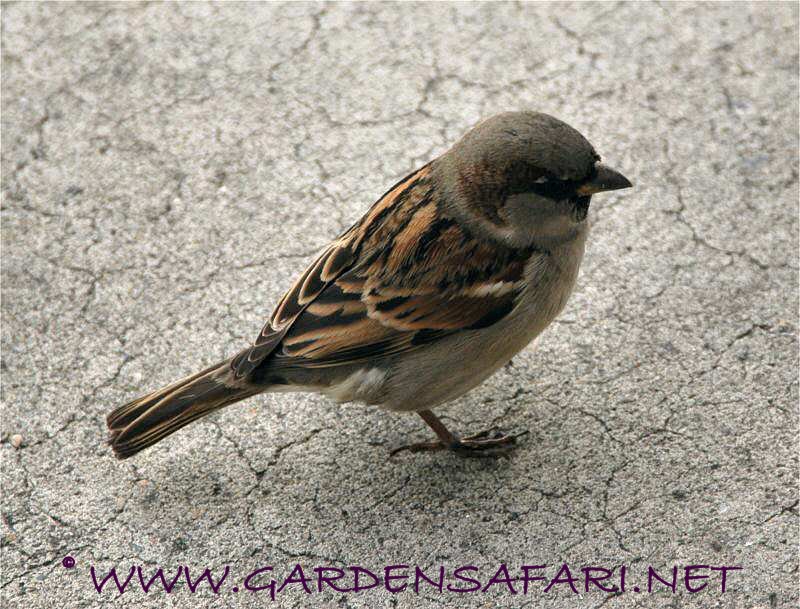
The House Sparrow (Passer domesticus) is becoming something of a rarity nowadays. Picture's: $
We don't see many House Sparrows around because we live in a small village in a rural arae with lots of forests. That's the territory of the Tree Sparrows. Both species belong to a mainly tropical family of birds. Most of its members build huge and complicated nests. The House Sparrow very rarely builds such a complicated nest in the trees but mainly it nests under the tiles of roofs etc. The Tree Sparrow never weaves a nest for it is a real hole-nesting bird. By the way: in Northern America this family of birds is better known as the Weaver Finches. Usually over there the name sparrows is used to refer to the family of American Sparrows (Emberizidae), non of which live in Europe, let alone in our garden.
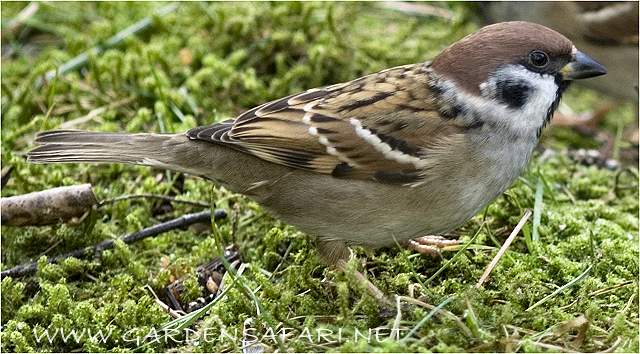
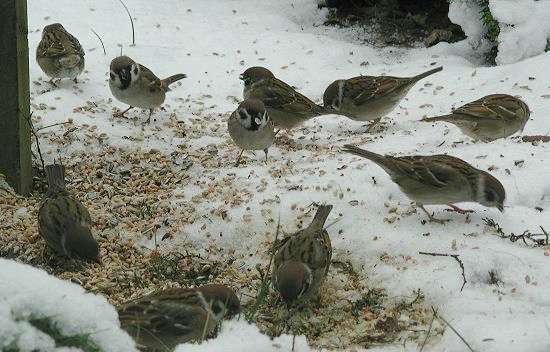
In winter the Tree Sparrow (Passer montanus) often appears in large numbers.
The Hedge Sparrow looks like both species of Sparrows and even shares the same name but actually it belongs to an entire different family of birds.
Titmice (or simply Tits), are referred to in Northern America as Chickadees as well. In summer they fly about rather unnoticed but as soon as winter comes you will see them virtually everywhere. A number of species can become really tame. Tits are intelligent birds that over the years adapted themselves to the changing environment. For instance they learned how to open milk bottles to get into the tasty cream on top of milk. Most Titmice are resident birds that don't migrate at all or, if they do, it travels short distances only. The best known Tit is perhaps the Great Tit. Like most Tits this is a hole nesting bird. It often competes with the Blue Tit over the ownership of a good nesting hole. And because the Great Tit is just a tiny bit bigger (and stronger) it usually triumphs. All titmice eat insects, spiders and larvae in spring and summer, but switch to berries and nuts once winter approaches.
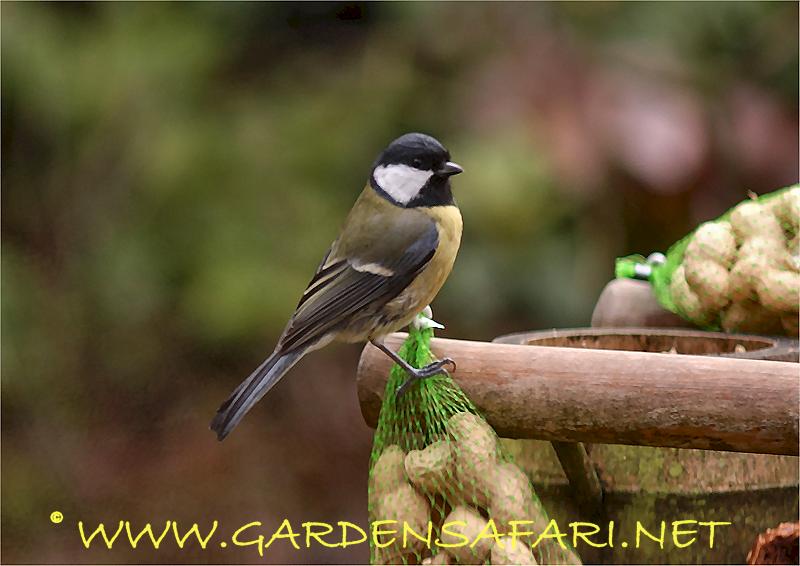
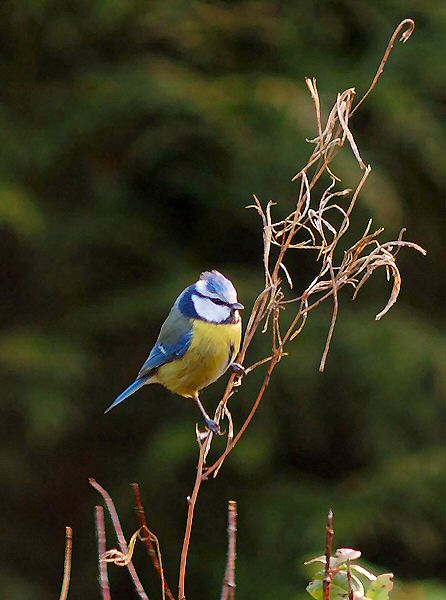
To the left the Great Tit
(Parus major) and to the right a Blue Tit (Nowadays: Cyanistes caeruleus, used to be Parus caeruleus).
There are two more Tits that frequent our garden. They are less colourful however. The Marsh Tit is just as cheeky as the two blue species. Going from east to west in the Benelux the bird becomes less common. The Crested Tit only lives in woody areas. It prefers older pines and is therefore less common. If the crested Tit visits your garden it won't be very shy but it's also less forward than the three species already mentioned.
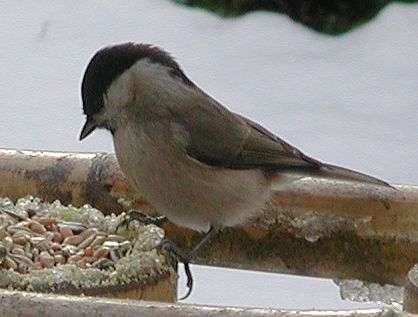

Two more frequent visitors to out feeding stand: the Marsh Tit (Nowadays: Poecile palustris, used to be Parus palustris) and the Crested Tit (Nowadays: Lophophanes cristatus, used to be Parus cristatus).
The smallest Titmouse in Central Europe is the Coal Tit below. It is even slightly smaller than the Blue Tit is. It is not a very striking bird, but can easily be recognized as it really lokks like any other Tit and has a unique big black cap showing a white line in the middle. Its song is soft and not very special, but it sings all year round. And it is not only the male that sings, the females sing just as much. The species lives on pines, so probably it will not turn up in everyone's garden. The Coal Tit is not shy at all, but it is difficult to take a good picture of the animal as it is rather restless. When it visits our feeding table it gives the impression of being nervous and moves frantically. It is mare calm when sitting on a baggy of peanuts. The picture below is not of the best quality, alas.
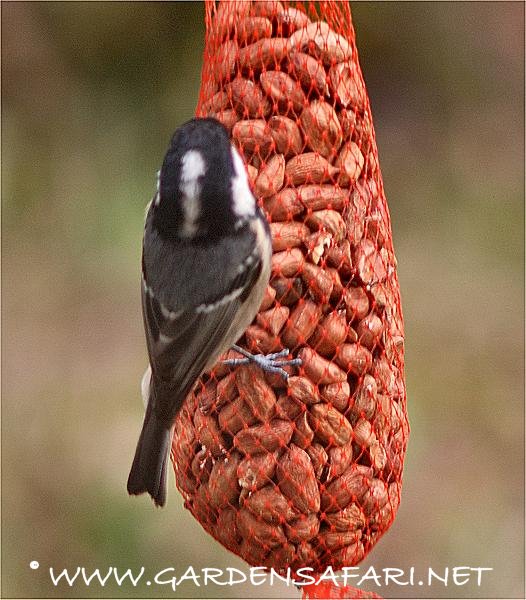
A very nervous species: the Coal Tit (Periparus ater, but used to be Parus ater).
Even though it bears the word Tit in its name, the Long-tailed Tit actually is not a Titmouse at all but it belongs to its own family of Passerine Birds.
Many finches are beautiful, colourful and skillful singing birds. Seeds are their main source of food which you can tell by looking at their beak: short, thick and strong, able to crack all kind of seeds and nuts. Chaffinches are common birds all over Europe. In Western Europe they are especially seen in winter when they are less shy and because there are simply more of them in one place. Lots of Chaffinches from Scandinavia migrate to Western Europe in winter.

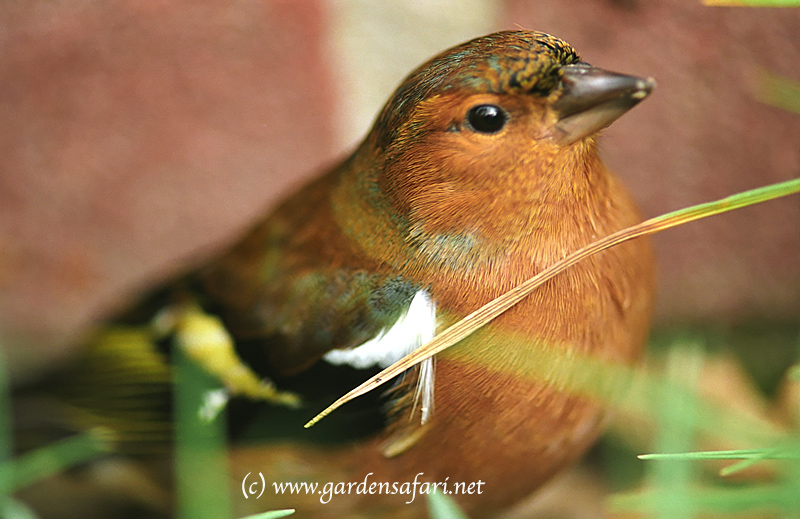
Even the Chaffinch (Fringilla coelebs) loves to sing from a high position. To the right a young male, not fully coloured yet.
The Greenfinch is not as shy as the Chaffinch especially during the breeding season. The bird is very fond of rose-hips and will do everything to get them! The green and yellow colours of the Greenfinch are less prominent during winter.
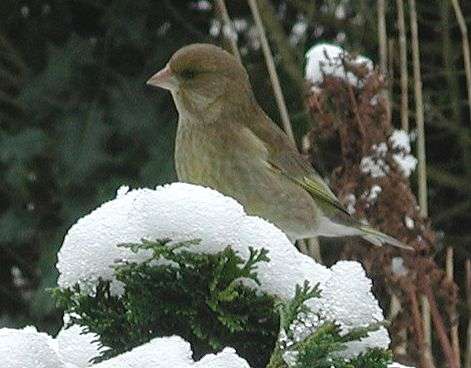
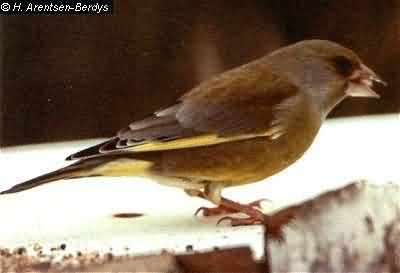
The Greenfinch (Chloris chloris) often is a bit pale in winter.
Another regular guest in my garden during winter is the Siskin. It breeds in this part of Europe in small numbers as it actually a bird to be found in pine forests in Northern Europe and Scotland. In winter these birds travel from southwards to England and the Benelux. The bird is not very shy, but it moves a lot which makes it difficult to photograph. In all pictures of the species on our pages a male is depicted. The female is darker, with less yellow colouring.
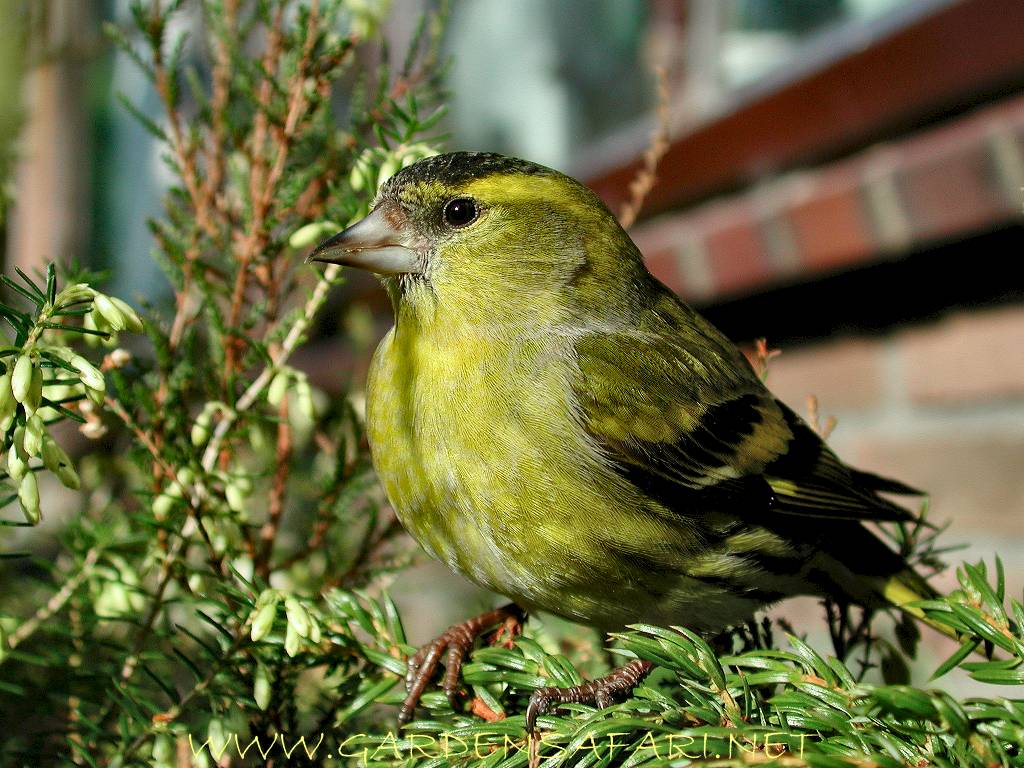

Siskins (Carduelis spinus) are regular visitors to our garden in winter.
Goldfinch is a rare visitor in my garden even though this is a rather common bird in this part of the world. The bird prefers more open surroundings and mild climate. It can be found in all parts of Europe except for in colder parts of Scandinavia.
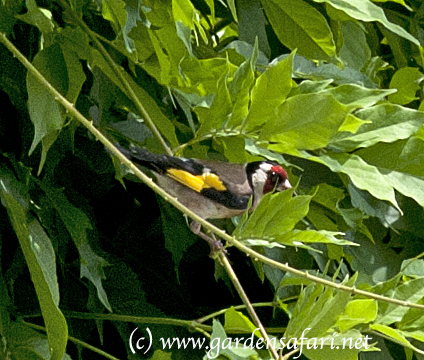
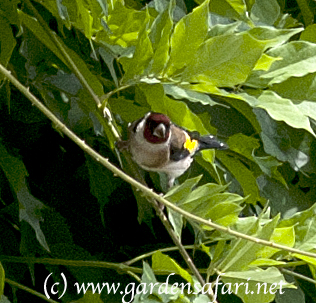
The contrasty colours of Goldfinch make it easy to spot this bird in the garden.
Other finches that appear in my garden are the Bullfinch, the Brambling,and the Linnet. Alas, I do not have pictures of these species available yet.
Warblers are very small birds. Most of them are very dull and some species are very hard to tell apart. All warblers are insect eaters. Most of them come to Europe in summer to breed and in autumn they leave again for Africa. The Chiffchaff below looks very much like the Willow Warbler, which is not depicted here. Even experts listen to them rather than look at them in order to tell them apart. The Willow Worbler is an excellent singer, but the Chiffchaff only says... chiff chaff (Hey, what else should a Chiffchaff say!). The Gold Crest is the smallest bird in the Benelux, weighing about 5 grams only. Gold Crests do not migrate and stay in Europe during winter. Then they regularly mix up with tits and finches.

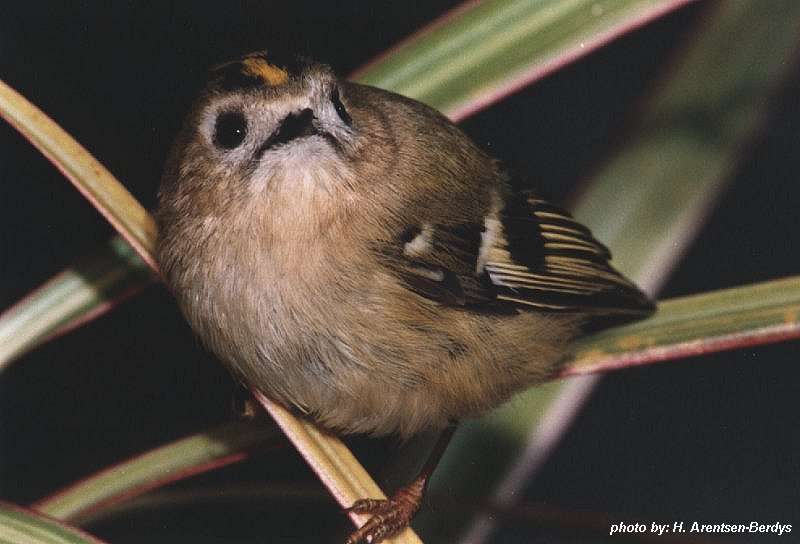
The Chiffchaff (Phylloscopus collybita) is a very dull bird, but the Gold Crest (Regulus regulus) has quite striking colours.
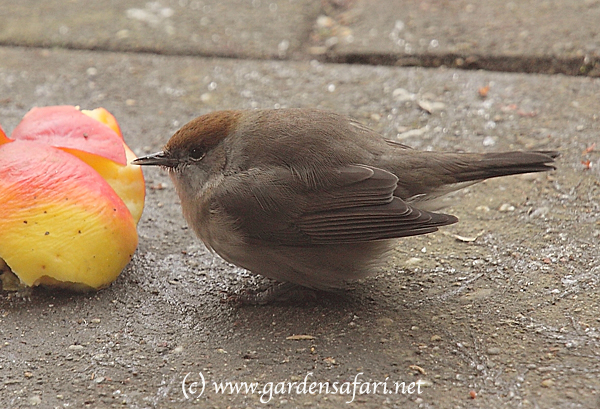
The Blackcap is a frequent visitor of the garden in summer. Its modest colours make it difficult for the photographer to notice that it is actually an interesting bird.
Most Passerine Birds sing beautifully. So it is amazing that the Crow family also belongs to the Passerine Birds: the sounds they utter vary from awful to horrible. The Crow is a very large, black bird. To be precise, the beak is black in Western Europe but in Central and Eastern Europe it is grey and black and the bird is called the Hooded Crow. Strangely enough, Hooded Crows also live in Ireland and Northern Scotland. In other parts of the UK one finds black crows only. It is not very important though as both birds belong to one and the same species. The Magpie is black and white and quite beautiful. Many owners of gardens don't think very positive about this animal because it regularly distroys the nests of smaller Passerine birds and eating their young. On the other hand: the young of the Magpie have to eat as well, don't they?

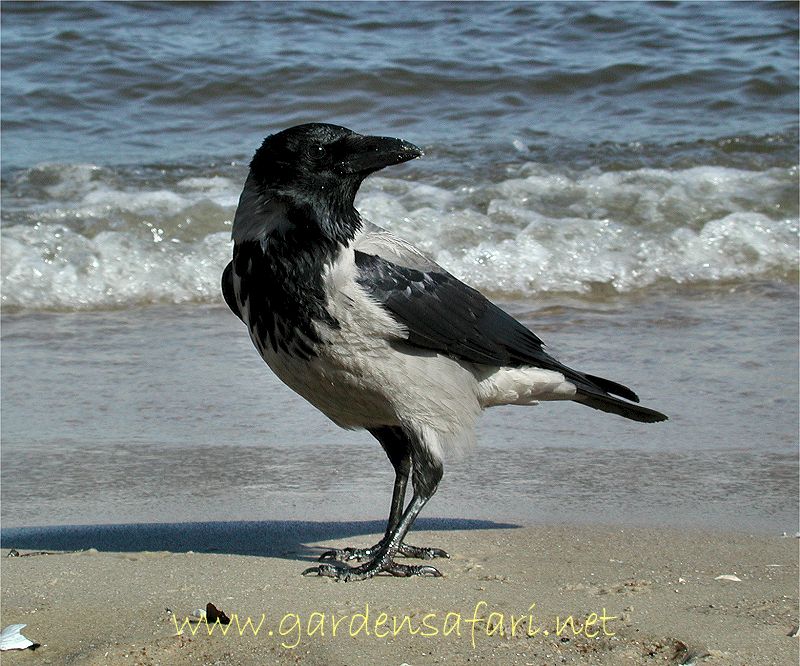
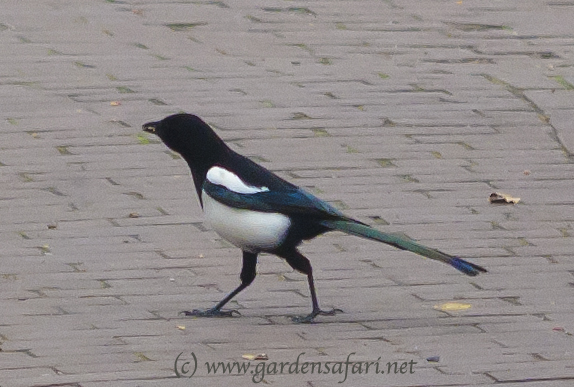
Carrion Crow (or Black Crows) in photo to the left and Hooded Crows in the middle belong to the same species: Corvus corone. Magpies (photo to the right) are not shy really, but they keep their distance from humans.
The Jackdaw is very rare in our garden. There are lots of them not far from our house but they seem to avoid our garden. It is the smallest Crow in Western Europe. Because we live in an area with lots of woodlands we see the Jay almost daily. Its main interest seems to be the water in the pond.
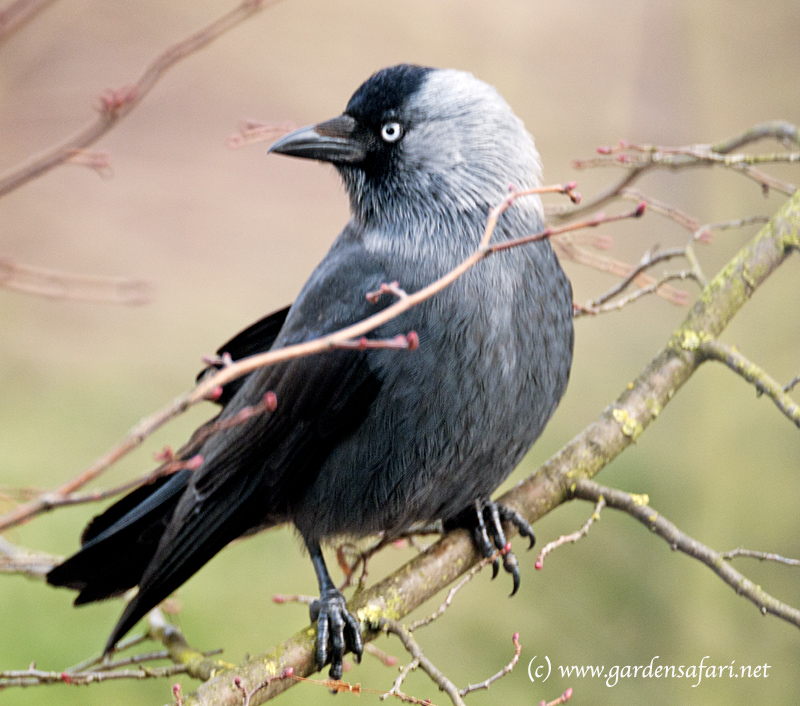
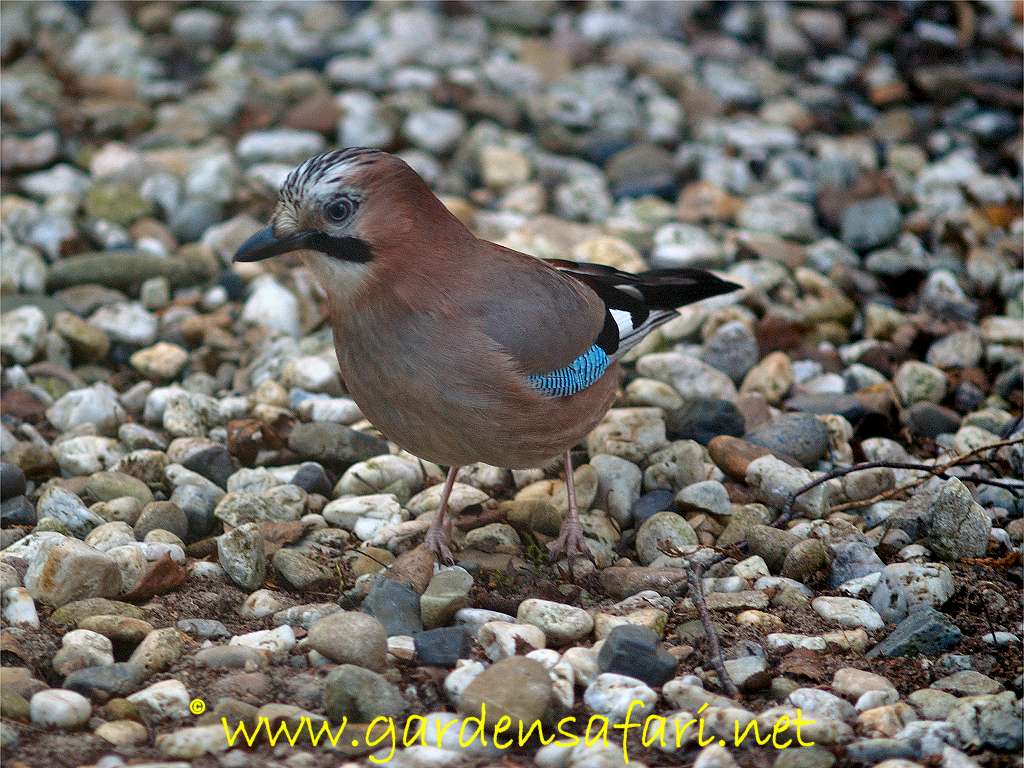
The Jackdaw (Corvus monedula) to the left and the Jay(Garrulus glandarius) to the right visit our garden irregularly.
Other members of the Crow family in our garden are the Rook and the Nutcracker. We have no acceptable pictures of these species yet.
The Passerine birds below all belong to various families and we can not group them in any other way. The Nuthatch (family Sittidae - Nuthatchers) can be a very common bird in your garden, provided there are many trees in the vicinity. The Nuthatch can climb trees but not only that - he can also descend trees with its head pointed downward which is very unique. It feeds mainly on insect and their larvae that live in wood. In winter it eagerly takes the food you offer on a bird feeder. The Hedge Sparrow (family Prunellidae - Hedge Sparrows) resembles other sparrows but actually it is not even closely related to them. It has the same pattern of stripes and colours but, concluding from the shape of the beak, it eats mainly insects. The bird is not shy at all and it is often erroneously assumed to be an ordinary sparrow and as such gets unnoticed.

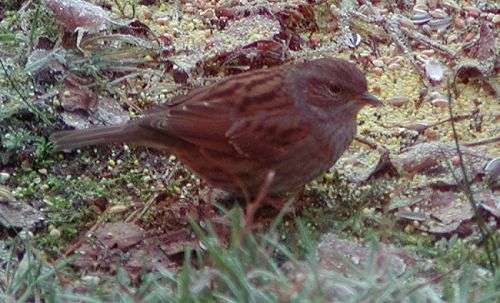
The Nuthatch (Sitta europaea) to the left and the Hedge Sparrow (Prunella modularis) to the right are insect eaters mainly.
When a bird is called Hedge Sparrows, one automatically assumes, wrongfully, that it is a sparrow. The same goes for the Long-tailed Tit. It belongs to its own family (Aegithalidae - Bush Tits) and is not closely related to the real Tits at all. Anyway, the first part of the name is highly accurate, for the Long-tailed Tit has a very long tail indeed. The animal lives in a kind of family structure and is seldom seen on its own.
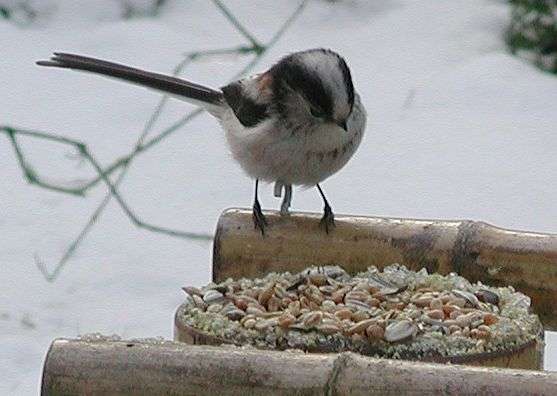
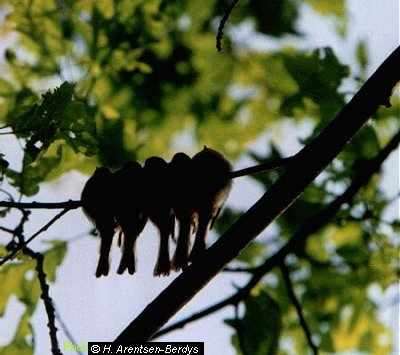
Long-tailed Tits (Aegithalos caudatus) always live in small groups.
The Starling (family Sturnidae - Starlings) is another well known bird. You might not be so fond of Starlings because they often come in large flocks and in no time at all they eat the cherries off your cherry trees. The same flocks however display breathtaking shows of synchronous flying in autumn. The Starling on the picture has fresh feathers and therefore looks extremely speckled. The speckles wear off later showing a green metallic colour. The Pied Flycatcher (family Muscicapidae - Fly Catchers) breeds in our garden regularly. The male arrives from Africa about two weeks before the female does. It spends these two weeks looking for a good nesting place (often a nesting box, which the species adopts without hesitation). When it has found a suitable one, it stays around, singing a lot. First of all to scare away other males, secondly to lure the arriving females. Upon hearing his song the females carefully inspect the place he found. If the female approves the site both birds form a couple. Otherwise she will leave and he will have to wait for the next female he can lure to his residence...
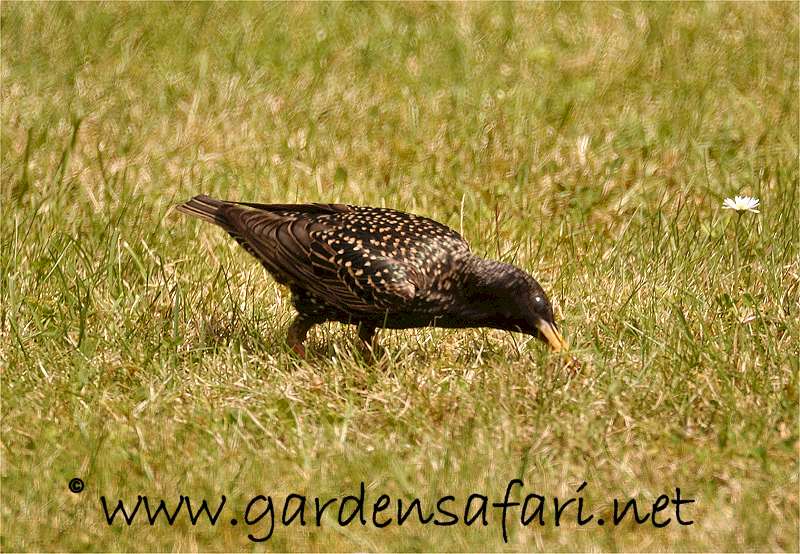
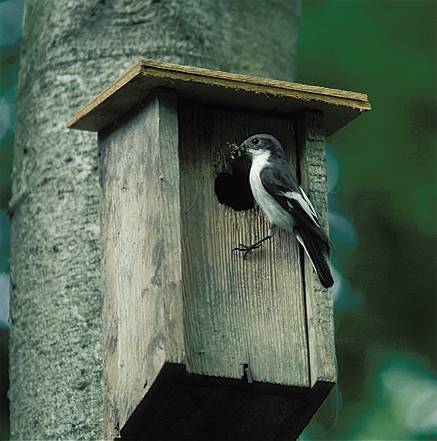
The Starling (Sturnus vulgaris) to the left rarely visits our garden, but the Pied Flycatcher (Ficedula hypoleuca) even breeds here.
In 2003 our first pipit (family Motacillidae) turned up. It was sitting on the ground, could be appraoched easily, performed his role as photo model very well and then took off. In close up this turns out to be a beautiful bird as well. Usually you do not get a chance for a close look like this. The Tree Pipit and the Meadow Pipit are two look-a-likes. Two experts however confirmed our impression that in this case we are talking about a Tree Pipit. This is a very common bird all over Europe, including most of Britain.
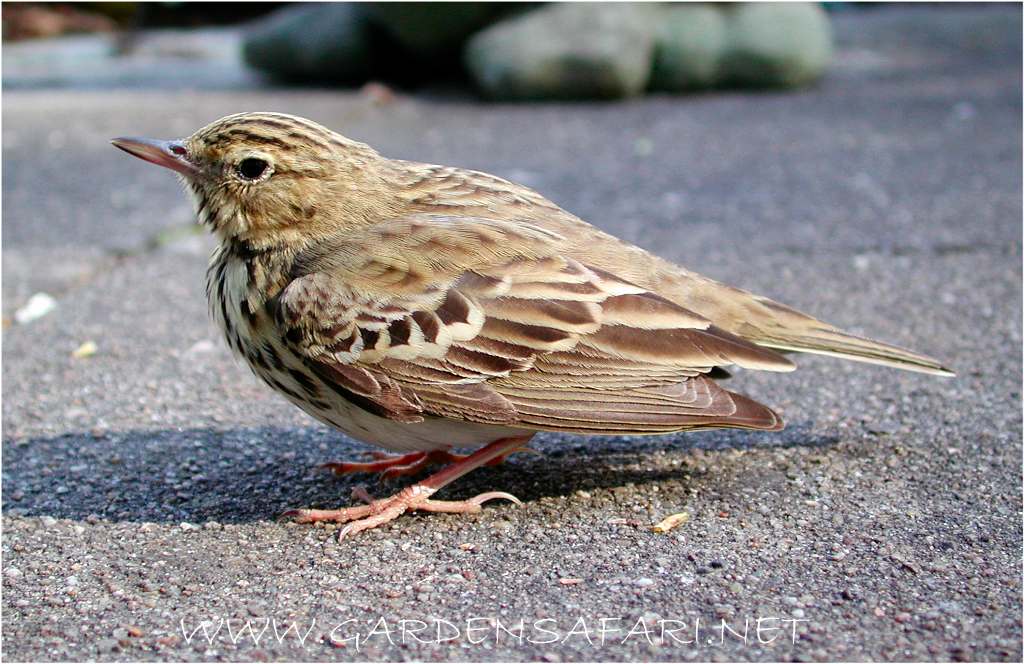

Very beautiful in a close up: the Tree Pipit (Anthus trivialis)
The Wren, also known as Winter Wren or European Wren, is one of the smallest birds in Europe. It looks quite funny: a round body and a very small tail that is held upright most of the time. It is often seen running through high vegetation in a mouse-like way. In our garden it seldom comes to our feeding table and if it does the visits are very brief. The Wren is the only European representative of the Wren family (Troglodytidae). The picture below is of rather poor quality, alas.
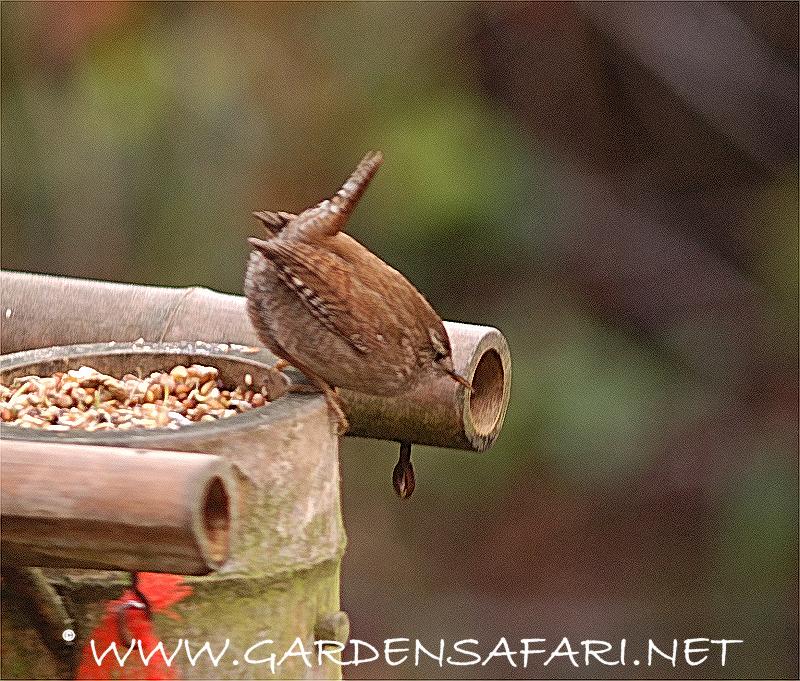
This bird is called the Winter Wren (Troglodytes troglodytes), for it even sings in winter.
An occasional guest making acrobaric flights above the garden is Barn Swallow (family Hirundinidae - Swallows). It is very fast so rather difficult to capture with a camera. Luckily, I've managed to take pictures of swallows when visiting Batavia shipyard in Lelystad in the Netherlands where they seemed to be less shy.
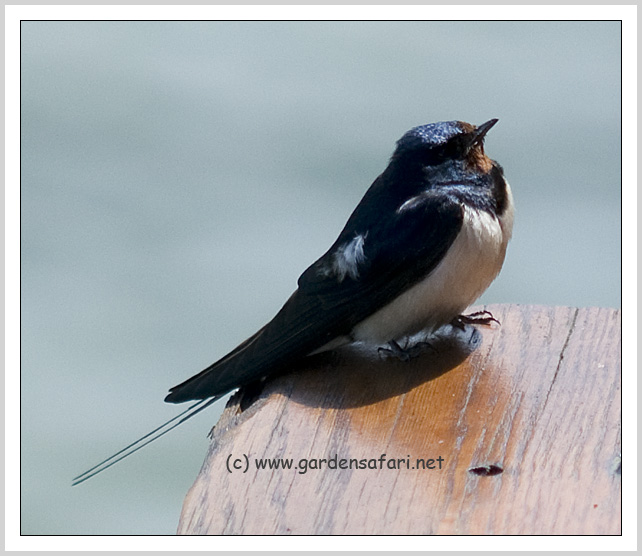
Also from close by Barn Swallow is a surprisingly beautiful bird.
There are other passerine birds in our garden, like White Wagtail (family Motacillidae - Pipits and Wagtails), Small Flycatcher (family Muscicapidae - Fly-catchers) and the Short-toed Tree Creeper (family Certhidae - Creepers). Up till now I have not managed to take good pictures of these birds.
Lots of people keep pigeons either because of their beautiful looks or because of the Pigeons ability to return home from afar (Homing Pigeons). In the past there was another reason for keeping pigeons, especially in France, pigeaon meat was considered a delicatecy! Many of these pigeons escaped and mixed with pigeons that lost their way to create a new species: the Town Pigeon. Thus we have no idea whether the one below is such a Town Pigeon or if this is a resting Homing Pigeon.
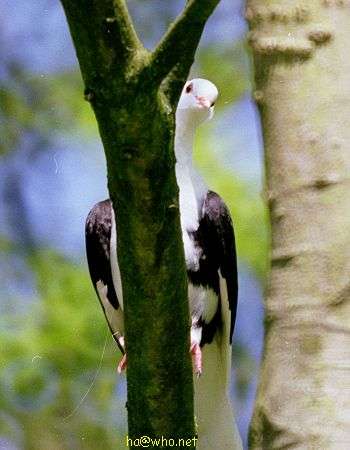
This could be a Homing Pigeon that got lost on the way, or is resting for a bit.
There are two species of wild pigeons in our garden: the small, forward and dull Collared Dove and the big and very shy Woodpigeon. Both species are very fond of our pond. Pigeons are remarkable birds indeed because they can actually drink water. In order to get some water most other birds just put their beak into the water and then throw their heads backwards. Pigeons don't do this, they just drink, which you can tell by the movements in their throats. Both species have a terrible monotonous song. The Woodpigeon is popular among meat eaters: weasels, goshawks and even humans appreciate them culinarily.
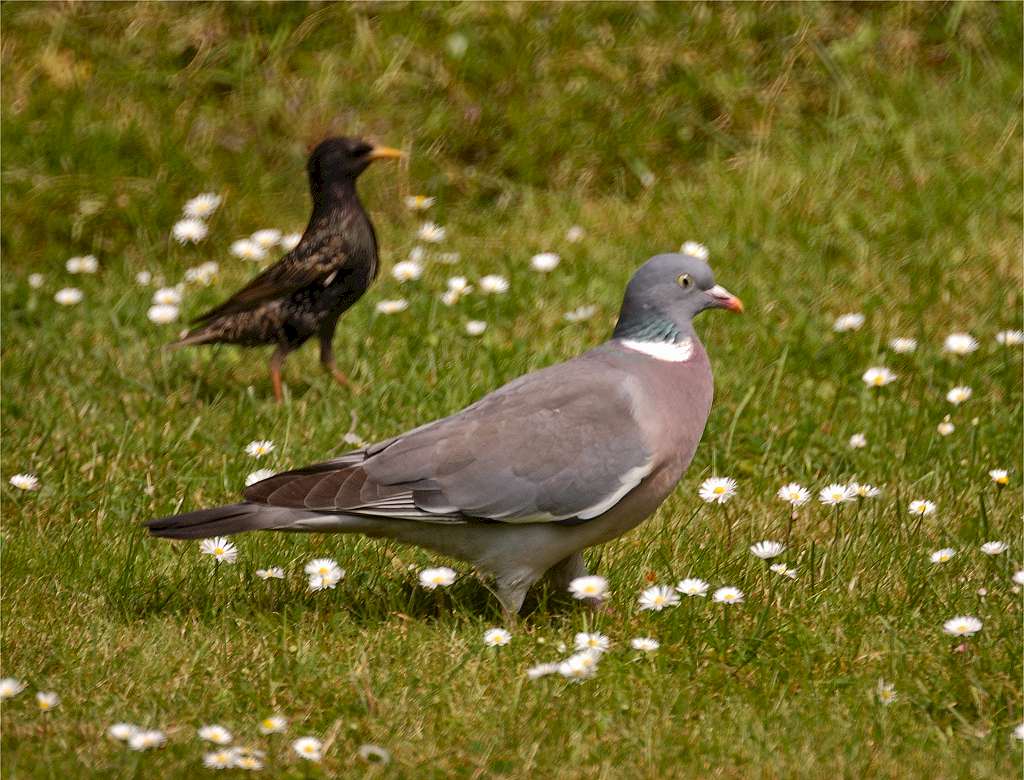

Both the Woodpigeon (Columba palumbus) and the Collared Dove (Streptopelia decaocto) are very common in our garden.
Even though Woodpeckers are well known birds, most often you can hear them before you can actually spot them. They live of the larvae of beetles that live in wood. In order to reach them they hew holes in trees and that's what you hear. Sometimes they simply strike the tree just for the fun of the sound of it. It's also their way of communication. They do make other sounds as well: they 'laugh' loudly. The Great Spotted Woodpecker is a common species in gardens and in winter it will take food from your bird feeder. The Green Woodpecker is a rare species. Unlike the other woodpeckers it is entirely dependant on ants. It visits our garden rarely to eat some of the ants that live in the grassfield.
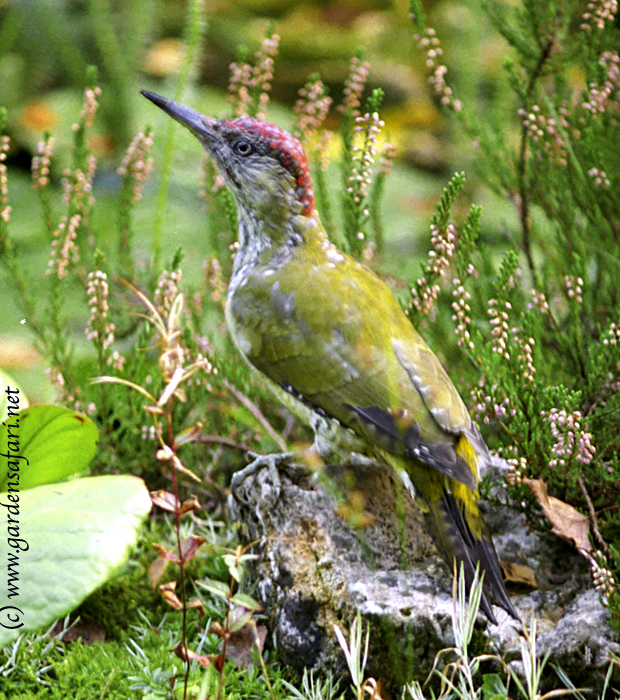
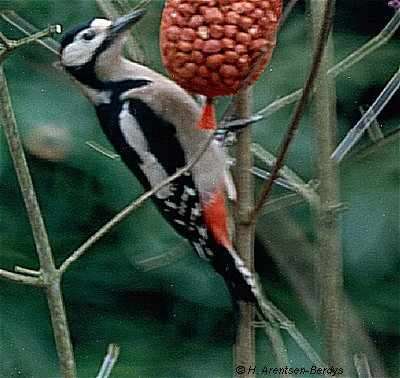
To the left a young Green Woodpecker (Picus viridis) and to the right the very common Great Spotted Woodpecker (Dendrocopos major).
The enormous Black Woodpecker visited my garden only once and I was just too late to grab my camera and take a picture of it.
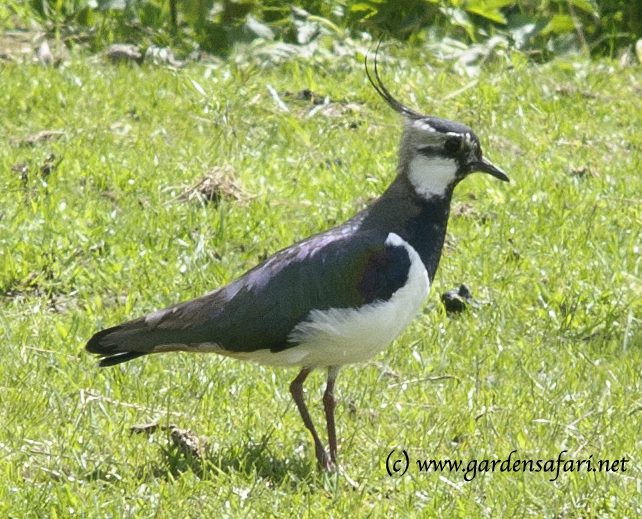
An interesting bird is the Northern Lapwing (family Charadriidae - Plovers), that in spring time often flies over my garden screaming the shrieking 'peewit'.
These are birds that appeared in our garden but actually should not have. Most are escapees from cages, breeders etc. and cannot really survive in the wild. Usually the winters are too cold for them (like for the Rosella) or there is not enough suitable food available for them, like for the Peafowl. Other species however are able to live through winters and some species may even become "European" birds, like the Mandarin Duck. The two female Peafowls in the pictures below suddenly and unexpectedly turned up in our garden. They wandered off from the neighbours' garden and into ours. They had quite lucky that day as our bird feeder just fell apart of misery and old age while a lot of bird food was still on it. Needless to add that the Peafowls had a dinner party there! The species below is known as the Indian Peafowl. It usually is blueish, especially the male, but the famous White Peafowl belongs to this species as well.


Turning up in our garden by surprise: two hens of the Indian Peafowl (Pavo cristatus).
The Mandarin Duck (family Anatidae) one day suddenly came to our pond and left some two weeks later. The duck does not originally belong in Europe but humans imported it from China. The male has a very beautifully coloured pattern on its feathers. Some animals escape or are set free and in certain areas of Europe and the animal now lives in there in the wild. We have no idea whether the female depicted below is such a wild descendant or if is a bird on the run. The Crimson Rosella (family Platyceridae - Rosellas) certainly is a bird that got astray, for this relative of the parakeet (it is not a parrot) from Australia will never survive the winters in Europe.
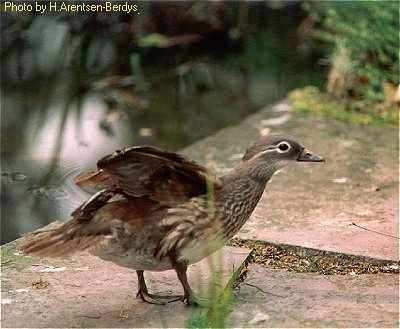
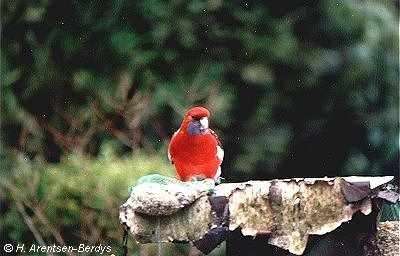
To the left a female Mandarin Duck (Aix galericulata) and to the right a Crimson Rosella (Platycercus elegans) that probably escaped.
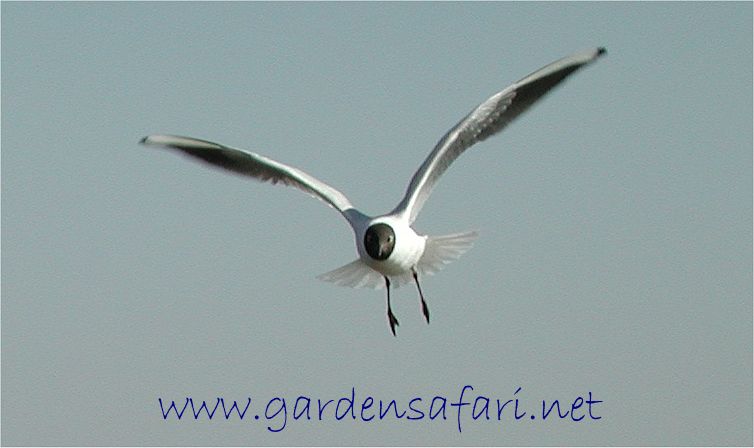
Sea Gulls are among the best known birds in the countries adjacent to the North Sea. Most species are confined to the coastal areas but the Black-headed Gull (family Laridae - Gulls) lives all over Europe. From time to time it visists our garden. On the lawn it behaves like a Blackbird: it walks about quickly, hoping for some Earth Worms to surface. Young Blakheaded Gulls are without the black cap and so are adults in winter. The big Grey Heron (family Ardeidae - Herons and Bitterns) actually is a very unwelcome visitor to our garden, for it is after the life in our pond, including our beautiful fish and the frogs. The Grey Heron is a migrating bird, even though some colonies, especially in the western part of Holland, do not migrate any longer. They find food in abundance there that they do not need to move.
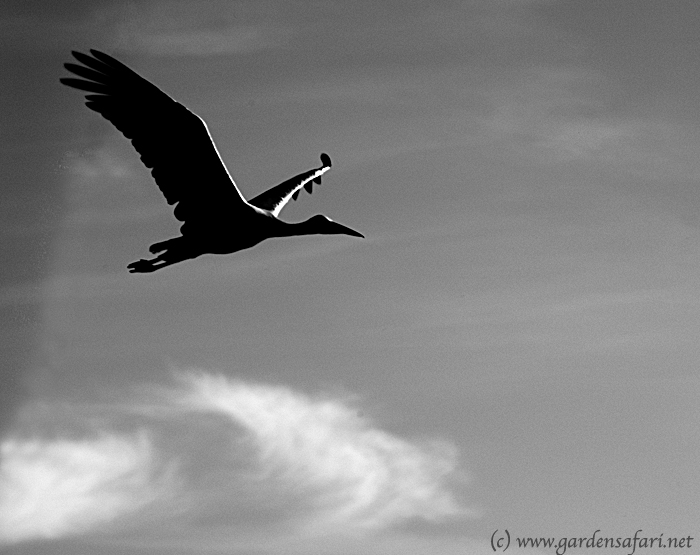
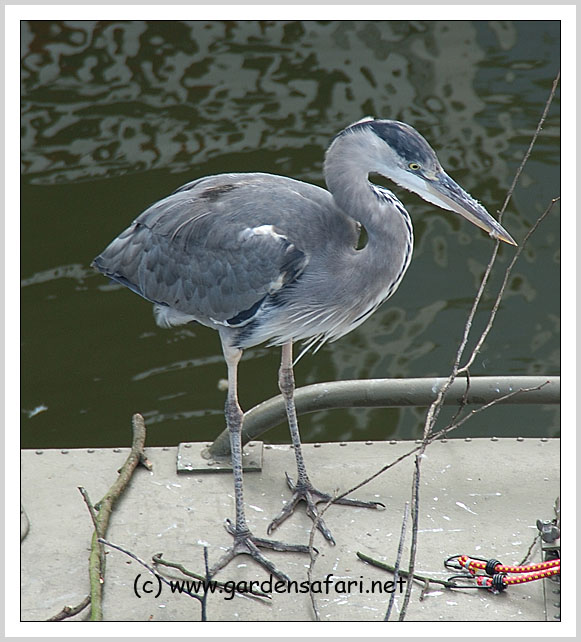
The majestic White Stork (Ciconia ciconia) was almost extinct in the Netherlands only 30 years ago. The Grey Heron (Ardea cinerea) is after our fish!
Black-headed Gulls (Larus ridibundus) are elegant flyers indeed.
There are still some birds that do sometimes pop up in the garden. First of all we had the Northern Goshawk (family Accipitridae - Hawks) in our garden once. It had just caught a woodpigeon. We quickly made an attempt to take a picture but with not a good result. Another irregular guest that flashes through the garden from time to time is the Common Kestrel (family Falconidae - Falcons) hunting for a blackbird or some other small bird.
Sounds © CLM "&" Vogelbescherming Nederland, used here by kind permission.

© Copyright 1998-2024 gardensafari.net (Hania Berdys)