

 English / engels
  Dutch / nederlands
[All pictures of garden wildlife on this page are thumbnails. Click on any thumbnail for a large format to be displayed.]
Dragonflies are among the most beautiful insects here in the Low Countries, except for some butterflies perhaps. Even though they are skilful flyers and colourful animals once adults, their larvae are another cup of tea. They do resemble their adults a bit, but lack the long abdomen and the wings.
Very often you will see two dragonflies flying about together. Often the shape of the two bodies will remind you of a heart or a wheel. Actually they are mating. The male grabs the female just behind the head. The female holds on to the male just behind the body. In this position the male is impregnating her. Now this is odd, for the male's sexorgans are located at the end of his tail. So if the end of the females body is just behind his own body and not near the end of his tail, how does he do it? After producing his sperm, he transports it to a special save-keeping organ near the front of the tail. And that's exactly where the female grabs him! When she is depositing her eggs the males of many species hold their grip on the female, to prevent other males from breaking in and taking over. Both the larvae and the adults are carnivores.
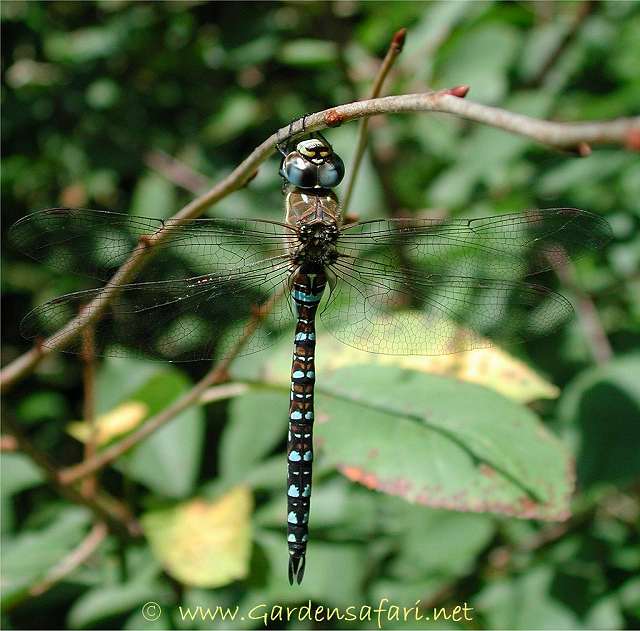
Migrant Hawker (Aeshna mixta)
Adult Migrant Hawkers are regularly seen in gardens and the larvae are often living in garden ponds.. More....
Suborder: Dragonflies (Anisoptera)
Adult Migrant Hawkers are regularly seen in gardens and the larvae are often living in garden ponds.. More....
Suborder: Dragonflies (Anisoptera)
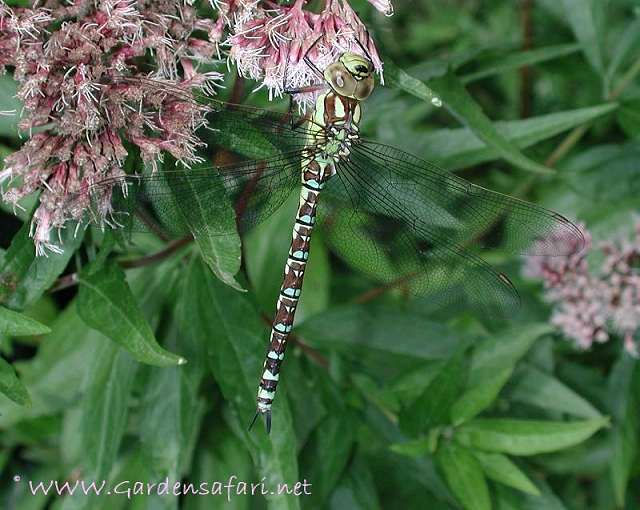
Southern Hawker (Aeshna cyanea)
Closely related to the previous species, but the dark markings on segments 9 and 10 are connected. more...
Suborder: Dragonflies (Anisoptera)
Closely related to the previous species, but the dark markings on segments 9 and 10 are connected. more...
Suborder: Dragonflies (Anisoptera)
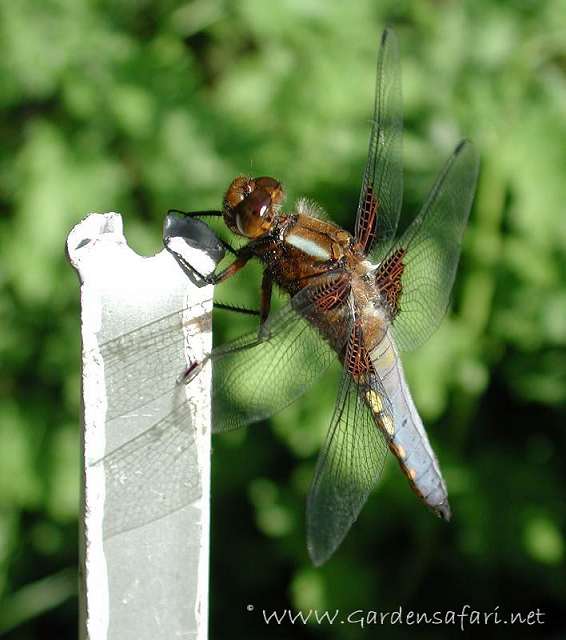
Broad-bodied Chaser (Libellula depressa), male
Unmistakable: the Broad-bodied Chaser has a broad body indeed. The back of older males and some very old females is blue. more...
Suborder: Dragonflies (Anisoptera)
Unmistakable: the Broad-bodied Chaser has a broad body indeed. The back of older males and some very old females is blue. more...
Suborder: Dragonflies (Anisoptera)
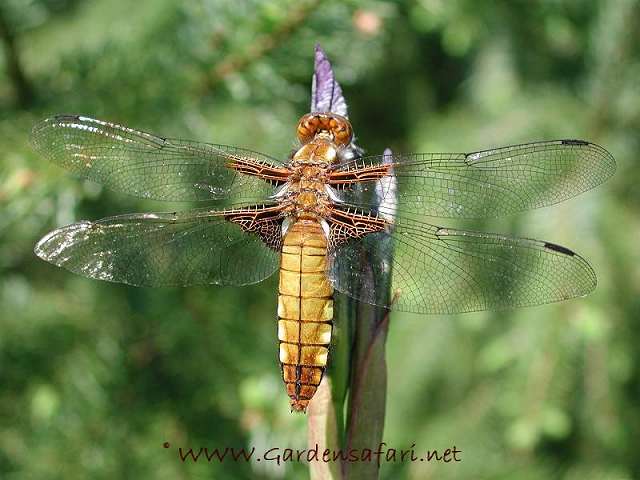
Broad-bodied Chaser (Libellula depressa), female
The back of young male Broad-bodied Chasers and most females is yellowish. more...
Suborder: Dragonflies (Anisoptera)
The back of young male Broad-bodied Chasers and most females is yellowish. more...
Suborder: Dragonflies (Anisoptera)
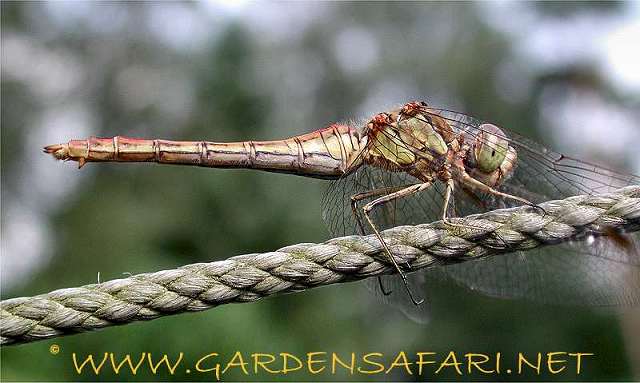
Vagrant Darter (Sympetrum vulgatum)
The Vagrant Darter has a dull red colour, but can be better identified by looking at other small details. more...
Suborder: Dragonflies (Anisoptera)
The Vagrant Darter has a dull red colour, but can be better identified by looking at other small details. more...
Suborder: Dragonflies (Anisoptera)

Common Darter (Sympetrum striolatum)
Most common darter all over Britain. more...
Suborder: Dragonflies (Anisoptera)
Most common darter all over Britain. more...
Suborder: Dragonflies (Anisoptera)
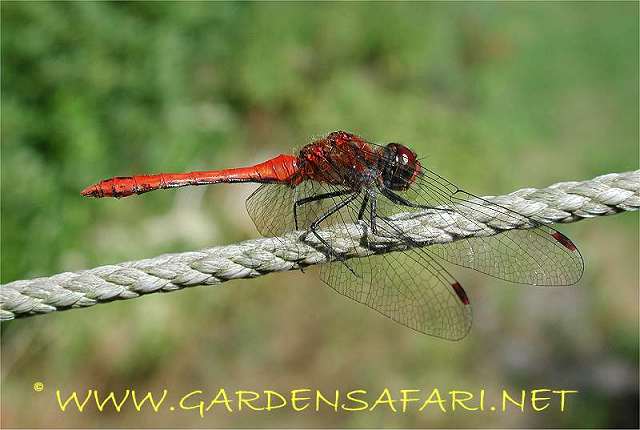
Ruddy Darter (Sympetrum sanguineum)
The Ruddy Darter is the reddest of all red darters. more...
Suborder: Dragonflies (Anisoptera)
The Ruddy Darter is the reddest of all red darters. more...
Suborder: Dragonflies (Anisoptera)

Large Red Damsel-fly (Pyrrhosoma nymphula)
Unmistakable red species, very common in gardens too. more...
Suborder: Damselflies (Zygoptera)
Unmistakable red species, very common in gardens too. more...
Suborder: Damselflies (Zygoptera)
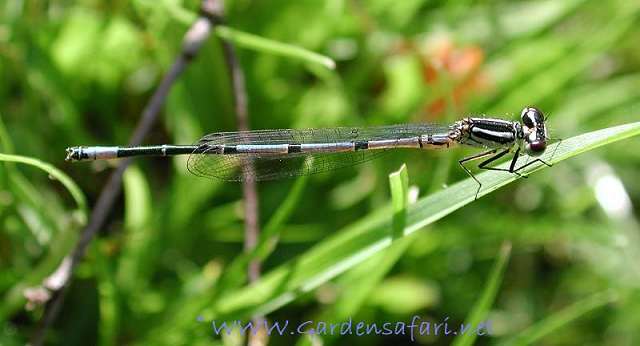
Azure Damselfly (Coenagrion puella), male
The male of the very common Azure Damselfly is mainly blueish. more...
Suborder: Damselflies (Zygoptera)
The male of the very common Azure Damselfly is mainly blueish. more...
Suborder: Damselflies (Zygoptera)
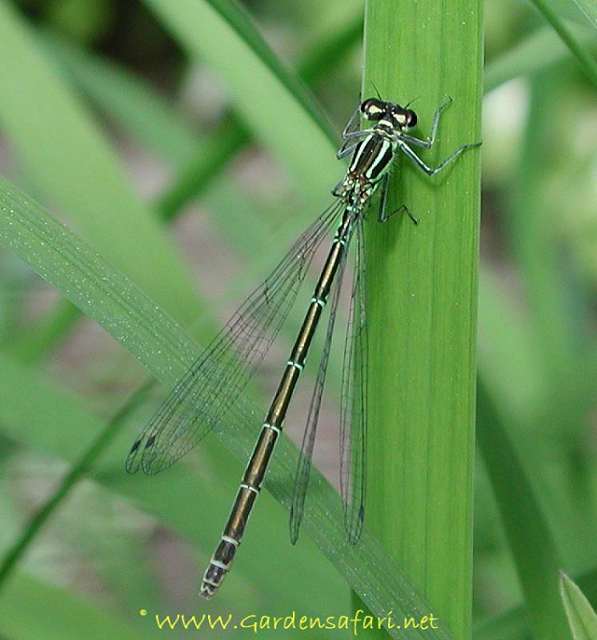
Azure Damselfly (Coenagrion puella), female
The back of the female of the Azure Damselfly is mainly black. The rest usually is greenish, sometimes whitish or blueish. more...
Suborder: Damselflies (Zygoptera)
The back of the female of the Azure Damselfly is mainly black. The rest usually is greenish, sometimes whitish or blueish. more...
Suborder: Damselflies (Zygoptera)

Blue-tailed Damselfly (Ischnura elegans)
The back of the female of the Blue-tailed Damselfly is mainly black, except for a striking blue ring near the end of the body. more...
Suborder: Damselflies (Zygoptera)
The back of the female of the Blue-tailed Damselfly is mainly black, except for a striking blue ring near the end of the body. more...
Suborder: Damselflies (Zygoptera)
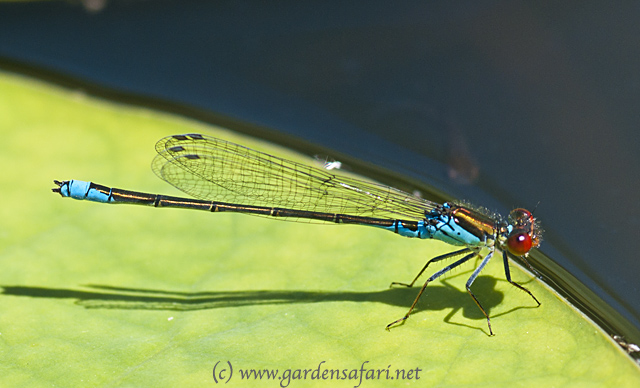
Small red-eyed damselfly (Erythromma viridulum)
Small Red-eyed Damselfly is a very common species that can be found from May till October near ponds, lakes and slow rivers with lush floating vegetation. More...
Suborder: Damselflies (Zygoptera)
Small Red-eyed Damselfly is a very common species that can be found from May till October near ponds, lakes and slow rivers with lush floating vegetation. More...
Suborder: Damselflies (Zygoptera)
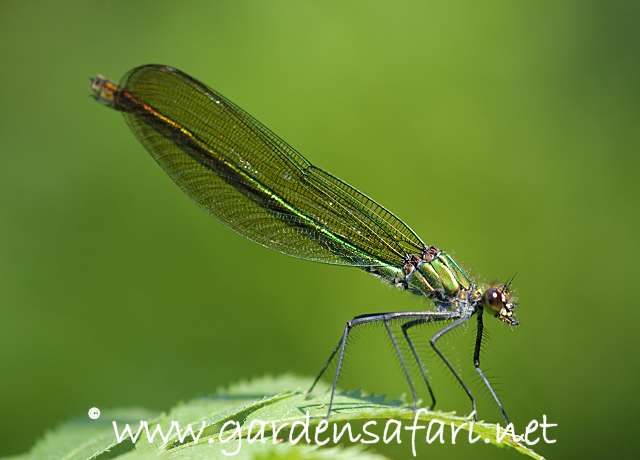
Banded Demoiselle (Calopteryx splendens)
Actually only the male is banded. more...
Suborder: Damselflies (Zygoptera)
Actually only the male is banded. more...
Suborder: Damselflies (Zygoptera)
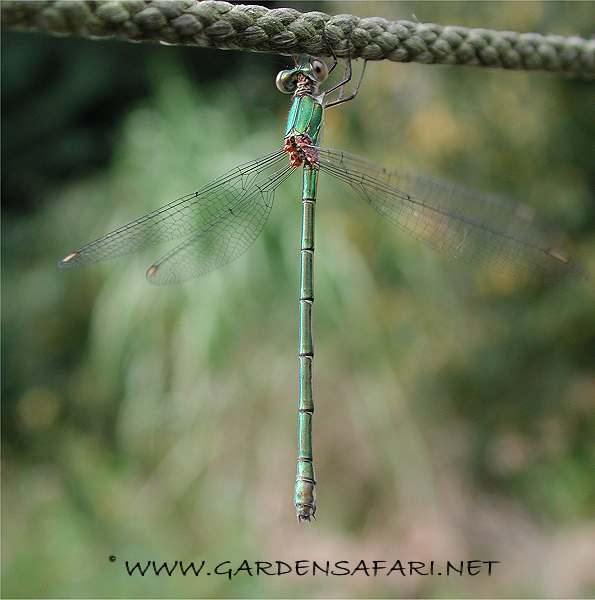
Willow Emerald Damselfly (Lestes viridis)
The Willow Emerald Damselfly deposits her eggs in trees. more...
Suborder: Damselflies (Zygoptera)
The Willow Emerald Damselfly deposits her eggs in trees. more...
Suborder: Damselflies (Zygoptera)

© Copyright 1998-2024 gardensafari.net (Hania Berdys)