

 English / engels
  Dutch / nederlands
[All pictures of garden wildlife on this page are thumbnails. Click on any thumbnail for a large format to be displayed.]
The family of Snout Moths, also referred to as Pyralid Moths, consists of over 200 British species. In rest they immediately stand out among all other micro moths, for they keep their antennae over their wings. So any moth in rest having their antennae fully exposed belong to this group. The English common name of Snout Moths is less accurate. Many members of this family have big snouts indeed, especially the Grass Moths, but others have unobtrusive snouts. Thus it is better to judge this family by the visible antennae. Nowadays some of the subfamilies have been put in families of their own, but still most moth experts treat the Pyralids as one group. Some are very beautiful animals indeed, such as the China Marks. Others are very small, but attractively coloured and well known by many, such as the Mint Moth. The family is divided various subfamilies.

Rose-flounced Tabby Endotricha flammealis
Small and in two varieties: light and dark. Flies in broad daylight. more....
Subfamily: Tabbies (Pyralinae)
Small and in two varieties: light and dark. Flies in broad daylight. more....
Subfamily: Tabbies (Pyralinae)

Large Tabby Aglossa pinguinalis
Closely related to the previous species, but far less colourful. more...
Subfamily: Tabbies (Pyralinae)
Closely related to the previous species, but far less colourful. more...
Subfamily: Tabbies (Pyralinae)

Gold Triangle Hypsopygia costalis
The beautiful purple Gold Triangle is similar to the Mintmoth below, but only flies by night. more...
Subfamily: Tabbies (Pyralinae)
The beautiful purple Gold Triangle is similar to the Mintmoth below, but only flies by night. more...
Subfamily: Tabbies (Pyralinae)
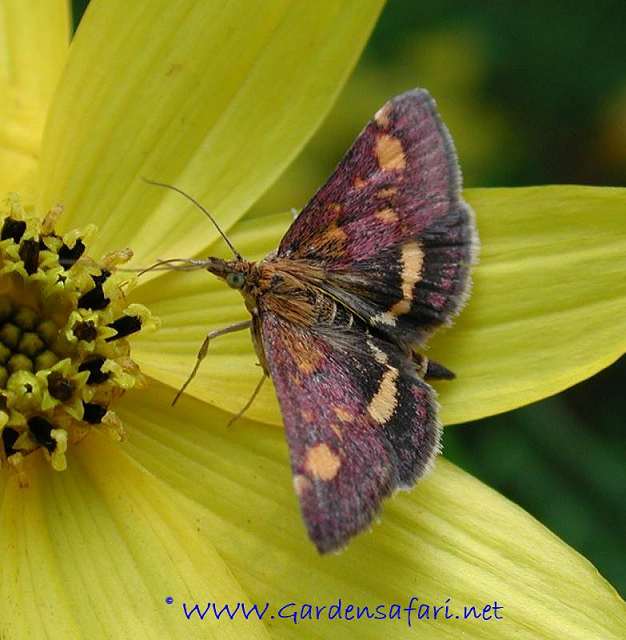
Mintmoth Pyrausta aurata
Strikingly beautiful, but small moth on the wing during day time. more...
Subfamily: Pyraustinae
Strikingly beautiful, but small moth on the wing during day time. more...
Subfamily: Pyraustinae
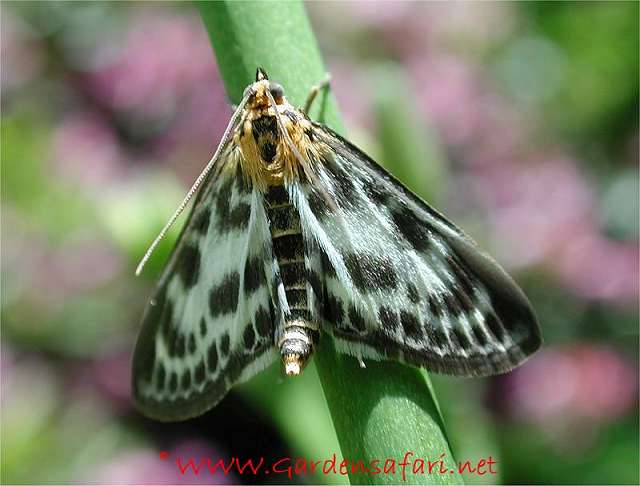
Small Magpie Moth Eurrhypara hortulata
Very beautiful, very big and very often seen. more...
Subfamily: Pyraustinae
Very beautiful, very big and very often seen. more...
Subfamily: Pyraustinae
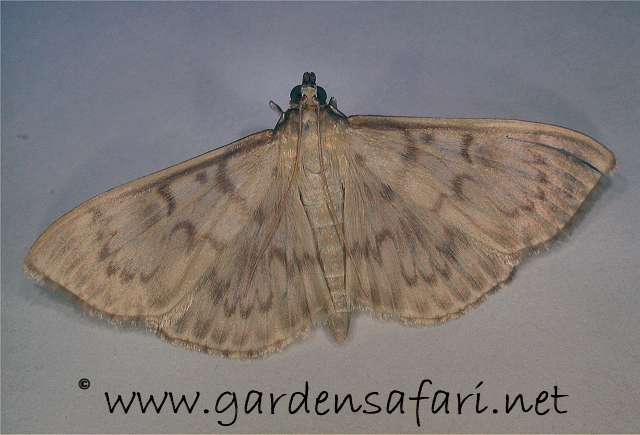
Mother of Pearl Pleuroptya ruralis
When this species is present, it often is on the wing in huge numbers. more...
Subfamily: Pyraustinae
When this species is present, it often is on the wing in huge numbers. more...
Subfamily: Pyraustinae
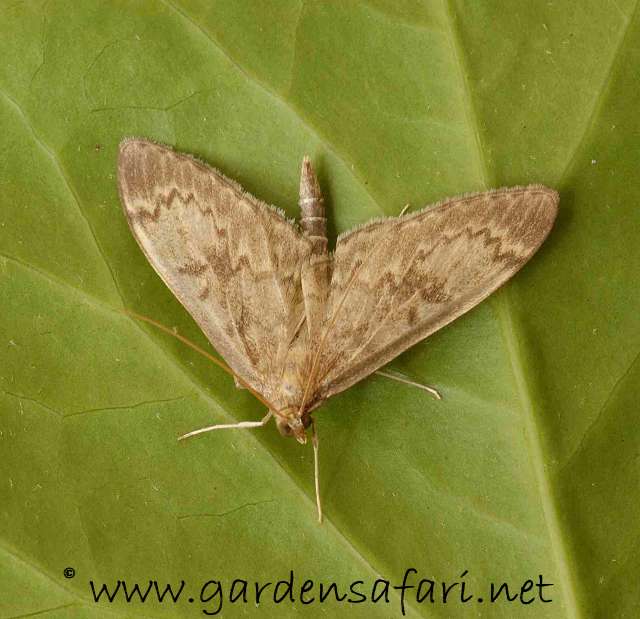

Udea prunalis
The zigzag line, the dark round dot and the white underbody and legs give this one away. more...
Subfamily: Pyraustinae
The zigzag line, the dark round dot and the white underbody and legs give this one away. more...
Subfamily: Pyraustinae

Agriphila straminella
This species has beautiful blue eyes, is active during daylight and is also called Agriphila culmella. more...
Subfamily: Grass Moths (Crambinae)
This species has beautiful blue eyes, is active during daylight and is also called Agriphila culmella. more...
Subfamily: Grass Moths (Crambinae)
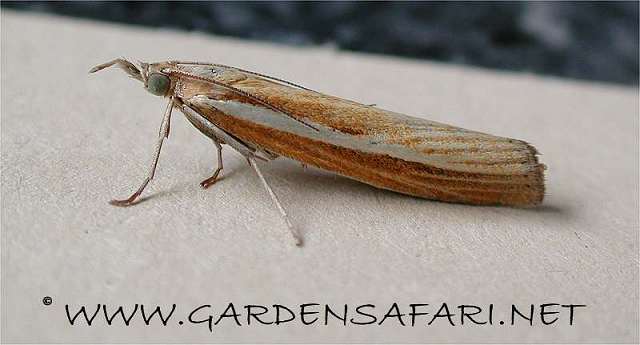
Agriphila tristella
Usually unmistakable because of the white smear all over the front wing. more...
Subfamily: Grass Moths (Crambinae)
Usually unmistakable because of the white smear all over the front wing. more...
Subfamily: Grass Moths (Crambinae)
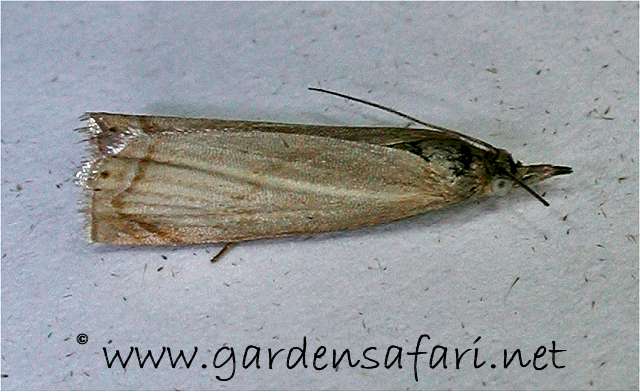
Garden Grass-veneer Chrysoteuchia culmella
This species pops up in lawns regularly. Sometimes it is striped, sometimes it is not. Has a band near the end of the wing, usually containing a dot. more...
Subfamily: Grass Moths (Crambinae)
This species pops up in lawns regularly. Sometimes it is striped, sometimes it is not. Has a band near the end of the wing, usually containing a dot. more...
Subfamily: Grass Moths (Crambinae)
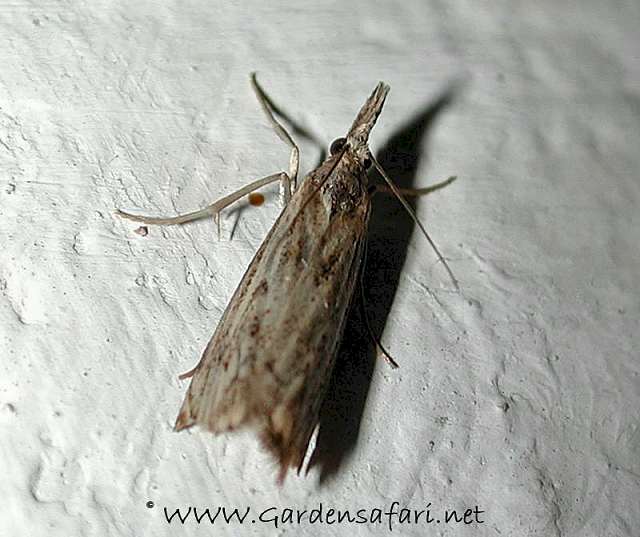
Crambus lathoniellus
Extremely difficult to identify, but it is rather dark and the markings do help... experts that is. more...
Subfamily: Grass Moths (Crambinae)
Extremely difficult to identify, but it is rather dark and the markings do help... experts that is. more...
Subfamily: Grass Moths (Crambinae)
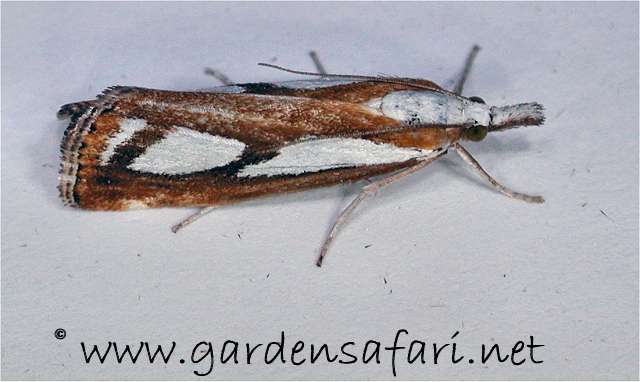
Catoptria permutatella
This species is not seen very often. There are similar species, but these are uncommon or even rare as well. more...
Subfamily: Grass Moths (Crambinae)
This species is not seen very often. There are similar species, but these are uncommon or even rare as well. more...
Subfamily: Grass Moths (Crambinae)
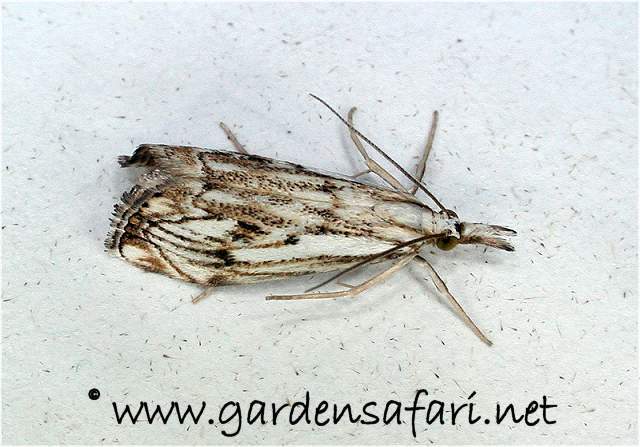
False Veneer Catoptria falsella
The False Veneer is a well marked and unmistakable grass moth. more...
Subfamily: Grass Moths (Crambinae)
The False Veneer is a well marked and unmistakable grass moth. more...
Subfamily: Grass Moths (Crambinae)
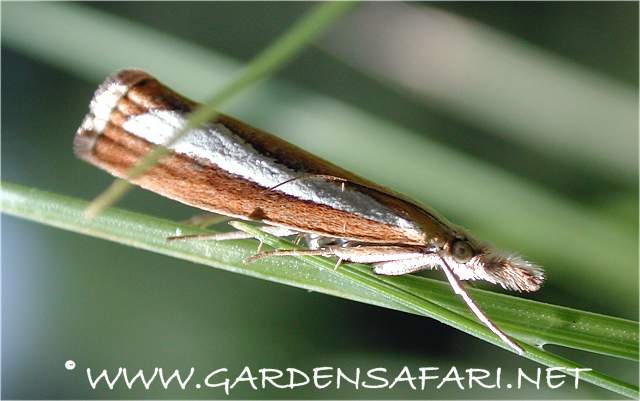
Pearl-band Grass Veneer Catoptria margaritella
The Pearl-band Grass Veneer is one of the most common Veneers and can be found all over Britain. more...
Subfamily: Grass Moths (Crambinae)
The Pearl-band Grass Veneer is one of the most common Veneers and can be found all over Britain. more...
Subfamily: Grass Moths (Crambinae)

Chilo phragmitellus
Maybe you don't believe it, but when this species stretches its wings, it is the same size as the Green-veined White. more...
Subfamily: Grass Moths (Crambinae)
Maybe you don't believe it, but when this species stretches its wings, it is the same size as the Green-veined White. more...
Subfamily: Grass Moths (Crambinae)

Small China Mark, male Cataclysta lemnata
The male is small, but incredibly beautiful compared to the bigger female. more...
Subfamily: China-marks (Nymphulinae)
The male is small, but incredibly beautiful compared to the bigger female. more...
Subfamily: China-marks (Nymphulinae)
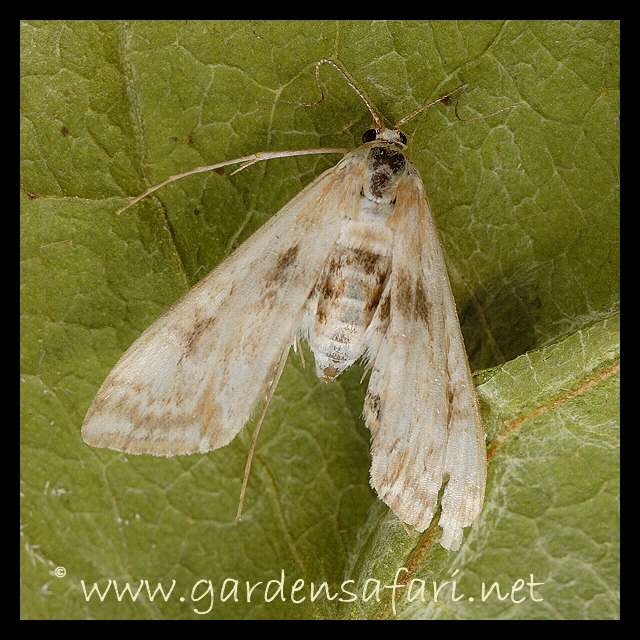
Small China Mark, female Cataclysta lemnata
The female is dull, compared to the male, but a lot bigger. more...
Subfamily: China-marks (Nymphulinae)
The female is dull, compared to the male, but a lot bigger. more...
Subfamily: China-marks (Nymphulinae)
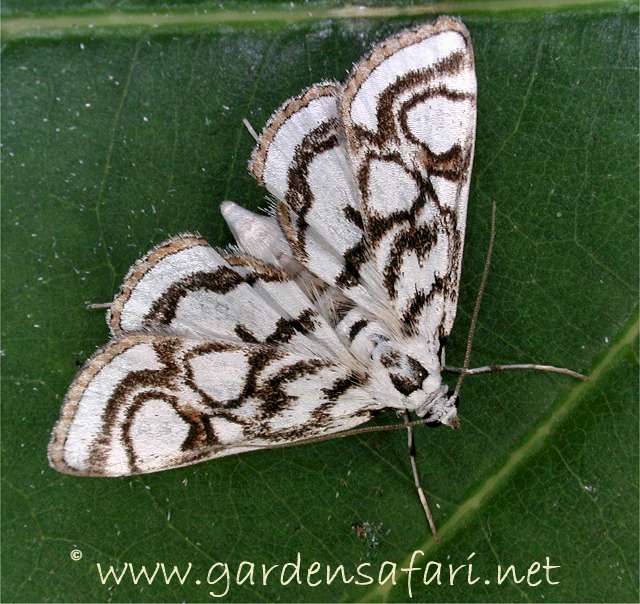
Beautiful China-mark Nymphula stagnata
Because it is so beautiful, it is called the Beautiful China-mark. more...
Subfamily: China-marks (Nymphulinae)
Because it is so beautiful, it is called the Beautiful China-mark. more...
Subfamily: China-marks (Nymphulinae)
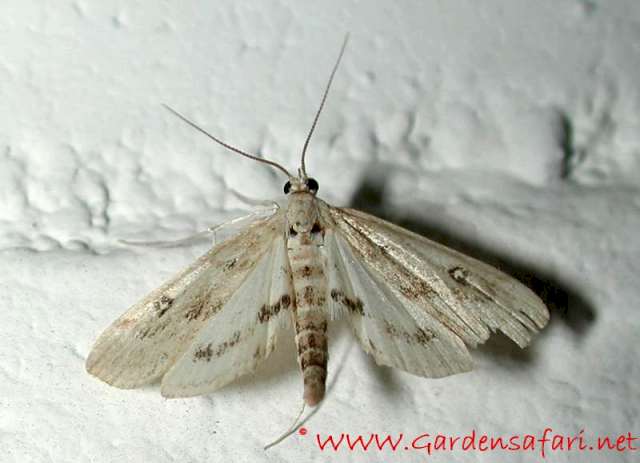
Ringed China Mark male Parapoynx stratiotata
The male is an unmistakable moth: white and with a clear ring. more...
Subfamily: China-marks (Nymphulinae)
The male is an unmistakable moth: white and with a clear ring. more...
Subfamily: China-marks (Nymphulinae)
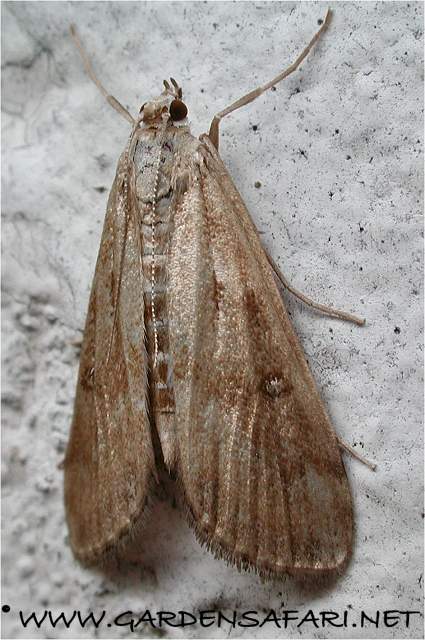
Ringed China Mark female Parapoynx stratiotata
The female looks like many other dull brown moths. Luckily the ring always helps out! more...
Subfamily: China-marks (Nymphulinae)
The female looks like many other dull brown moths. Luckily the ring always helps out! more...
Subfamily: China-marks (Nymphulinae)
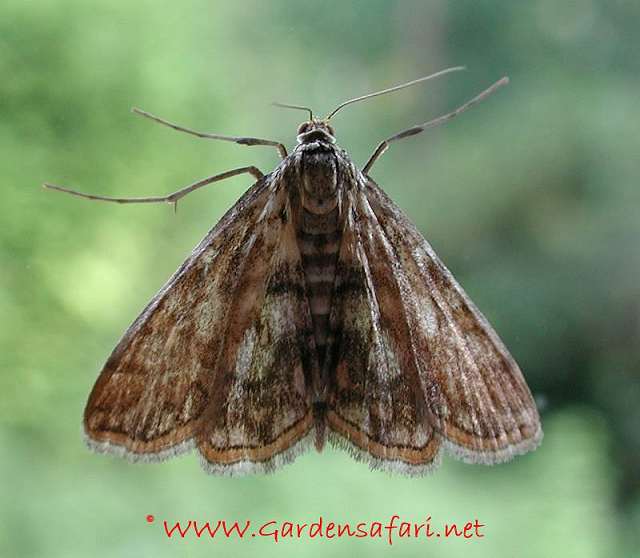
Brown China Mark Elophila nymphaeata
This moth is more beautiful than the photograph it is in. more...
Subfamily: China-marks (Nymphulinae)
This moth is more beautiful than the photograph it is in. more...
Subfamily: China-marks (Nymphulinae)
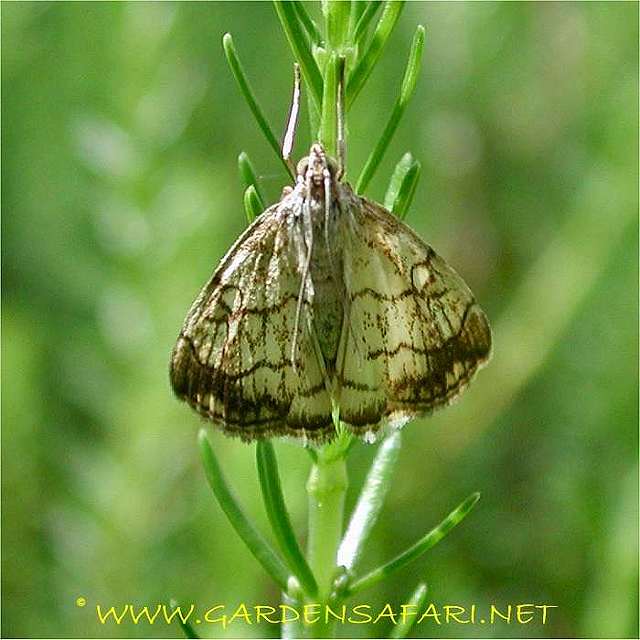
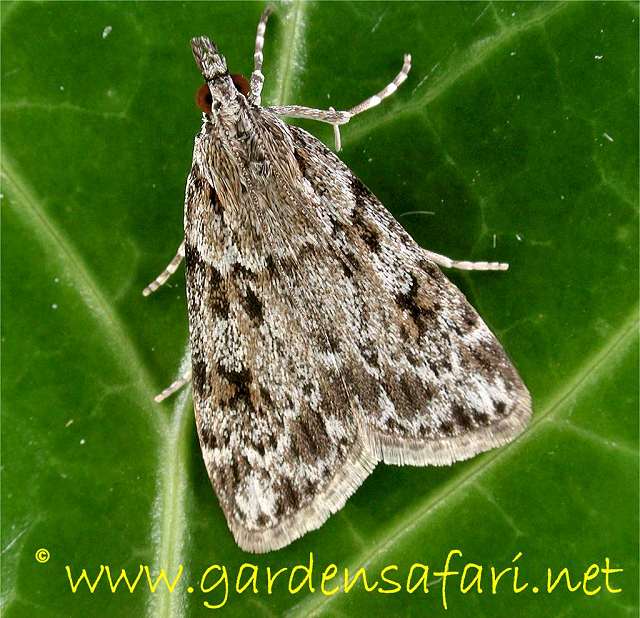
Brown Grey Scoparia ambigualis
This and the next two species are extremely similar. The Brown Grey is the biggest, but it is also the most variable of the three more...
Subfamily: Scopariinae
This and the next two species are extremely similar. The Brown Grey is the biggest, but it is also the most variable of the three more...
Subfamily: Scopariinae
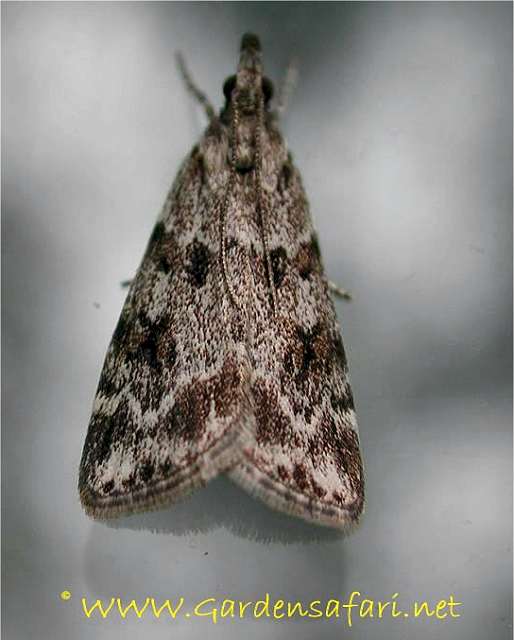
Eudonia truncicolella
Almost identical to the species above and the one below. Not even experts find great enjoyment identifying these species. more...
Subfamily: Scopariinae
Almost identical to the species above and the one below. Not even experts find great enjoyment identifying these species. more...
Subfamily: Scopariinae
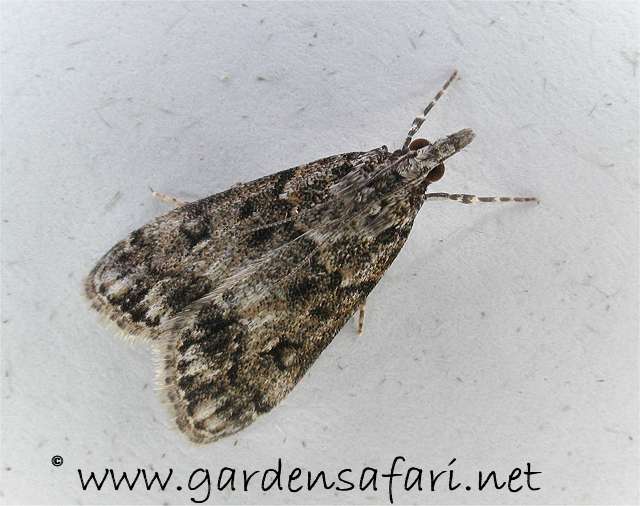
Dipleurina lacustrata
Almost identical to the two species above. And there are even more of them! Luckily only three species have been showing up in our garden so far. more...
Subfamily: Scopariinae
Almost identical to the two species above. And there are even more of them! Luckily only three species have been showing up in our garden so far. more...
Subfamily: Scopariinae
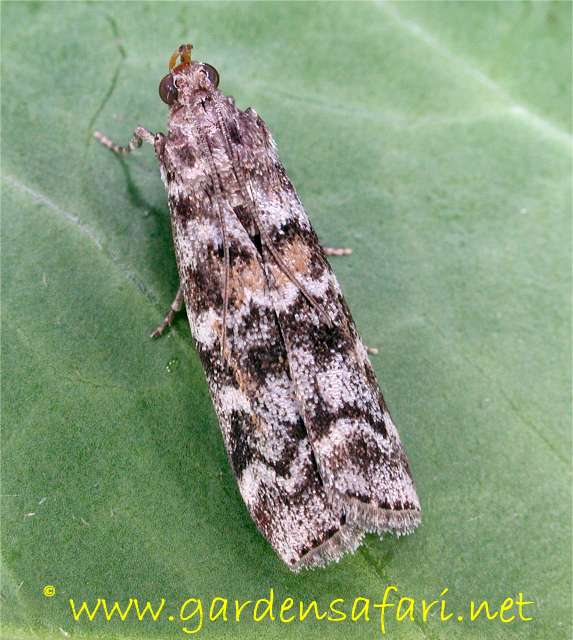
Dioryctria sylvestrella
Lots of similar animals in the genus Dioryctria, commonly known as Coneworm Moths. This is one of the few that's not too hard to identify. more...
Subfamily: Phycitinae
Lots of similar animals in the genus Dioryctria, commonly known as Coneworm Moths. This is one of the few that's not too hard to identify. more...
Subfamily: Phycitinae
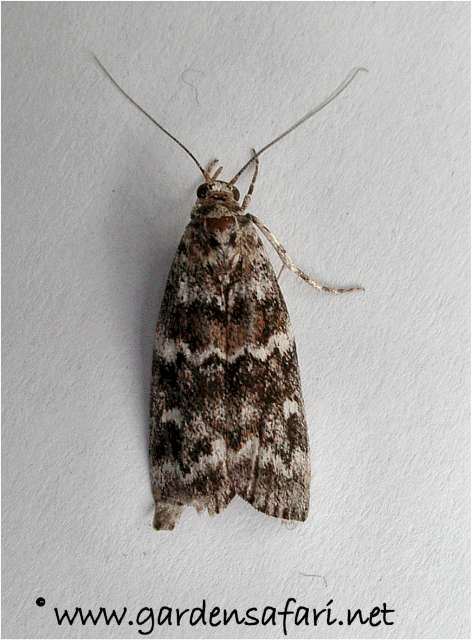
Spruce Coneworm Moth Dioryctria abietella
Dioryctria abietella is marked more contrasting then its nephew above. It is also known as the Pine Knothorn Moth. more...
Subfamily: Phycitinae
Dioryctria abietella is marked more contrasting then its nephew above. It is also known as the Pine Knothorn Moth. more...
Subfamily: Phycitinae

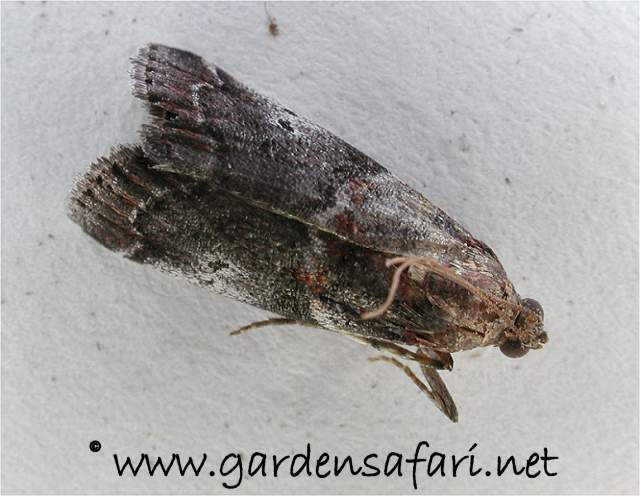
Porphyry Knothorn Moth Trachycera suavella
Largest and darkest species from this genus. Often referred to as Numonia suavella. more...
Subfamily: Phycitinae
Largest and darkest species from this genus. Often referred to as Numonia suavella. more...
Subfamily: Phycitinae
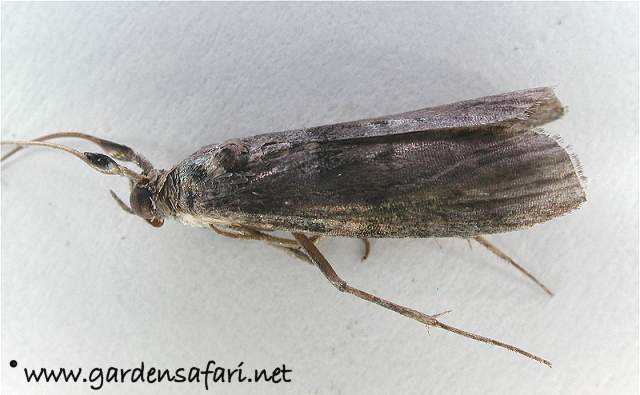
Phycita roborella
Only the male of Phycita roborella has antennae shaped this way. more...
Subfamily: Phycitinae
Only the male of Phycita roborella has antennae shaped this way. more...
Subfamily: Phycitinae
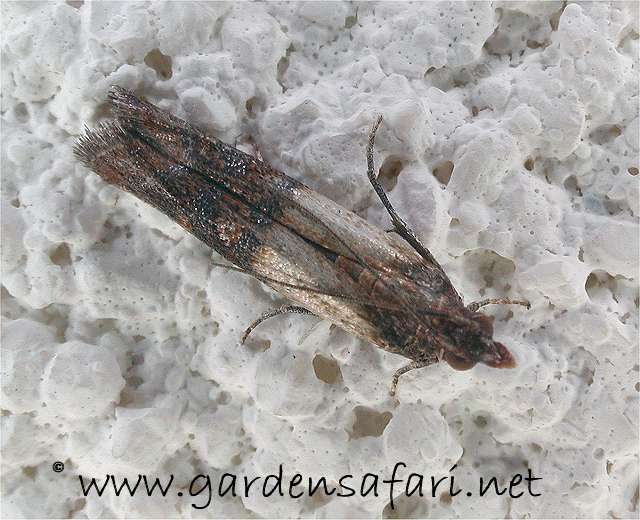
Indian Meal Moth Plodia interpunctella
Imported from Asia and now a pest in stored food. Usually found indoors. more...
Subfamily: Phycitinae
Imported from Asia and now a pest in stored food. Usually found indoors. more...
Subfamily: Phycitinae
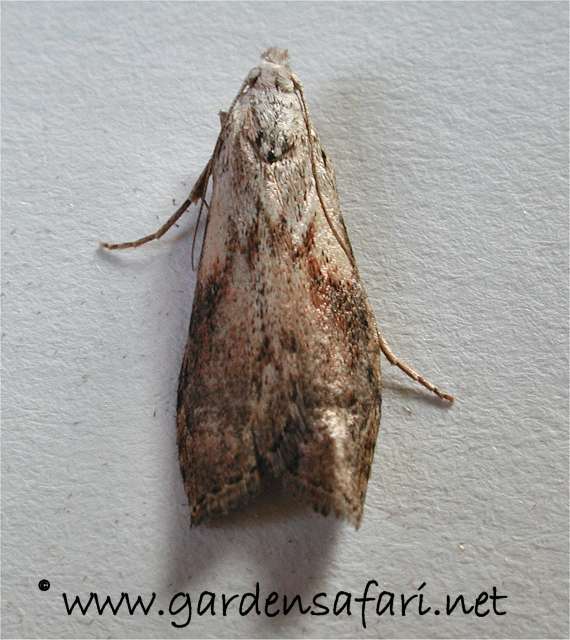
Bee Moth Aphomia sociella
Males and females of the Bee Moth differ considerably. In this picture a male. more...
Subfamily: Wax Moths (Galleriinae)
Males and females of the Bee Moth differ considerably. In this picture a male. more...
Subfamily: Wax Moths (Galleriinae)

© Copyright 1998-2024 gardensafari.net (Hania Berdys)